Chapter 20: Electric Current, Resistance, and Ohm's Law
94 problems solved · Free preview of every solution shows how it’s started · Watch the full videos with a free 7-day trial →


Section
20.1 Current
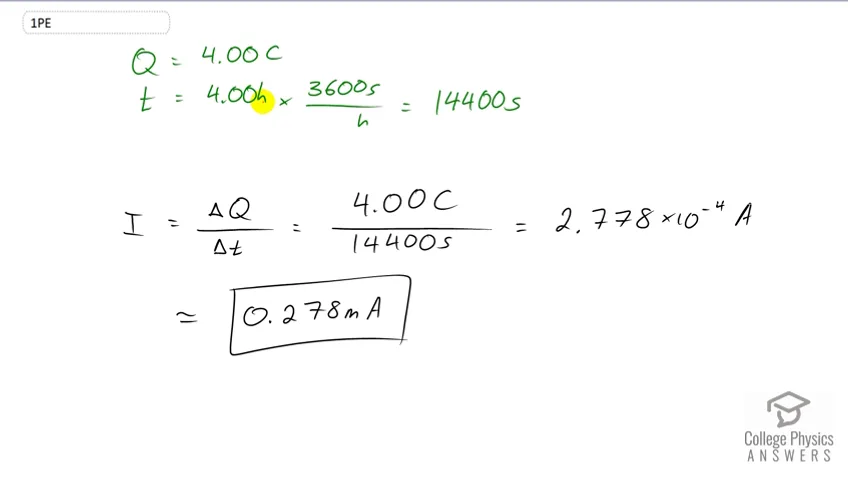 0:48Problem 1FreeWhat is the current in milliamperes produced by the solar cells of a pocket calculator through which 4.00 C of charge passes in 4.00 h?
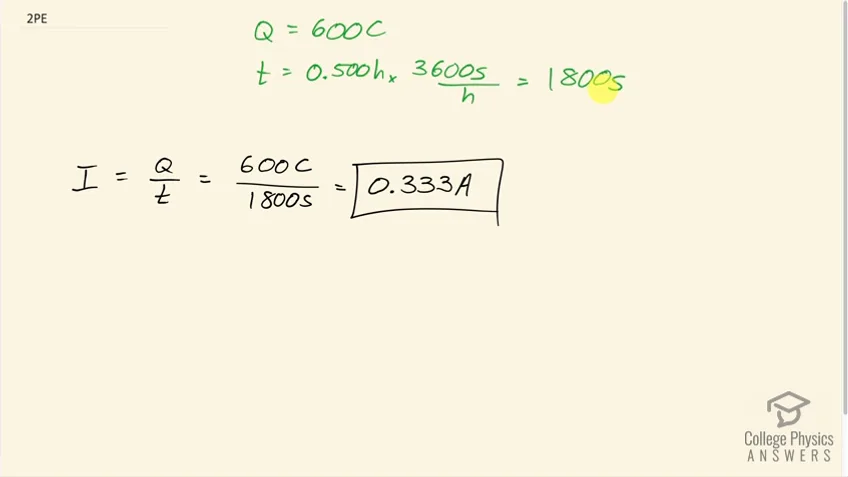 0:31PreviewProblem 2Full video with free trialA total of 600 C of charge passes through a flashlight in 0.500 h. What is the average current?
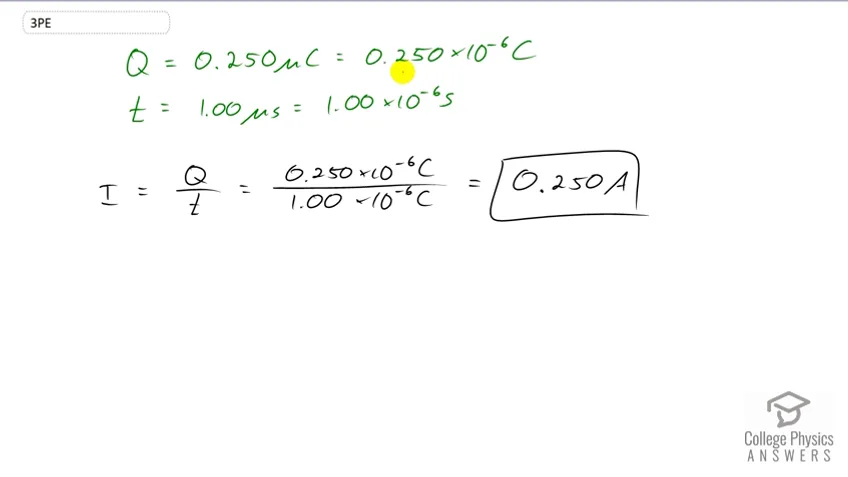 0:44PreviewProblem 3Full video with free trialWhat is the current when a typical static charge of moves from your finger to a metal doorknob in ?
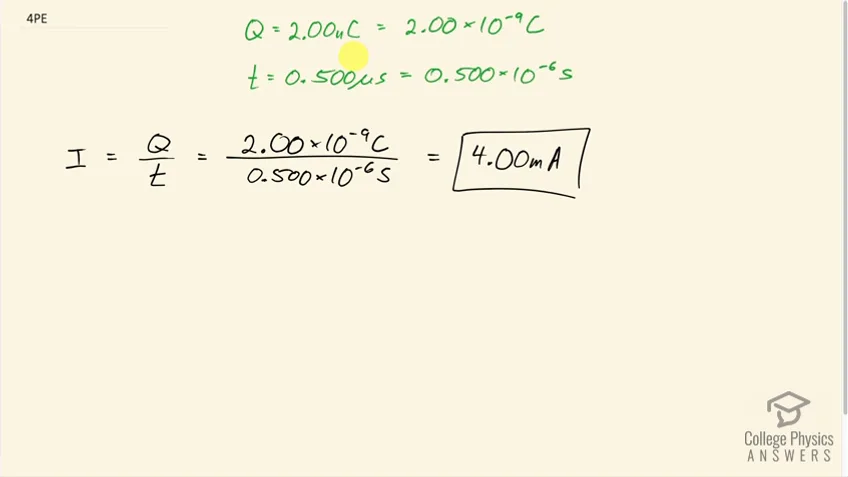 0:41PreviewProblem 4Full video with free trialFind the current when 2.00 nC jumps between your comb and hair over a time interval.
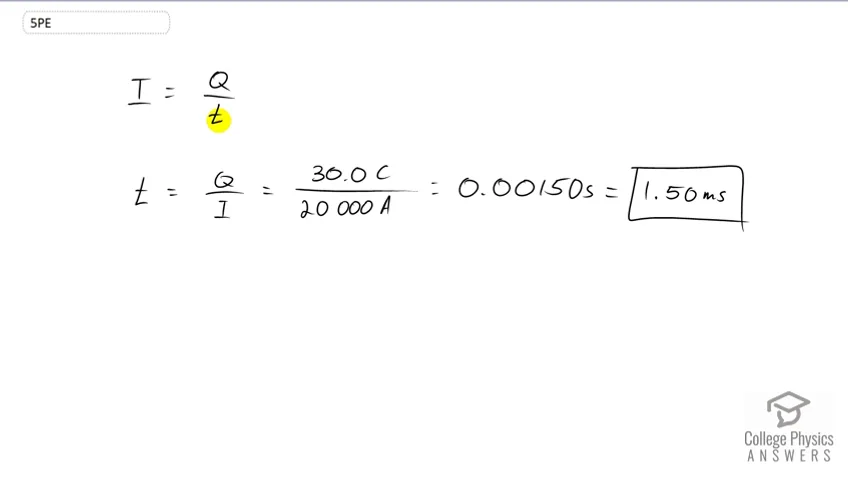 0:38PreviewProblem 5Full video with free trialA large lightning bolt had a 20,000-A current and moved 30.0 C of charge. What was its duration?
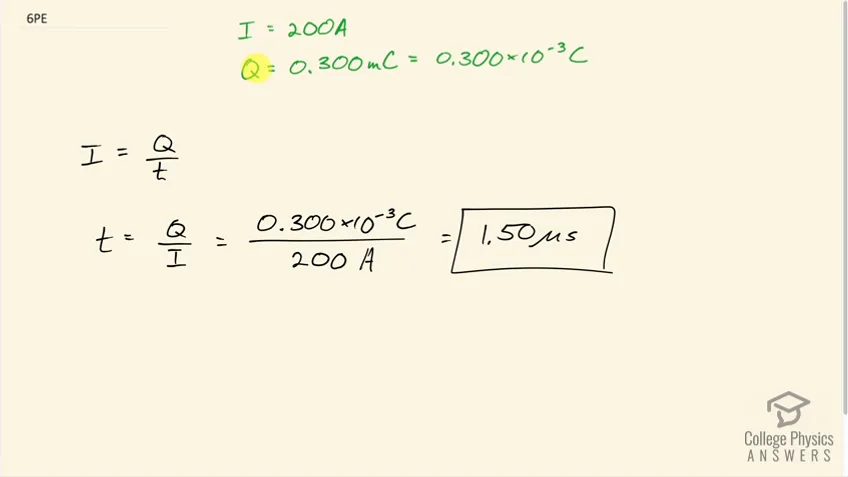 0:44PreviewProblem 6Full video with free trialThe 200-A current through a spark plug moves 0.300 mC of charge. How long does the spark last?
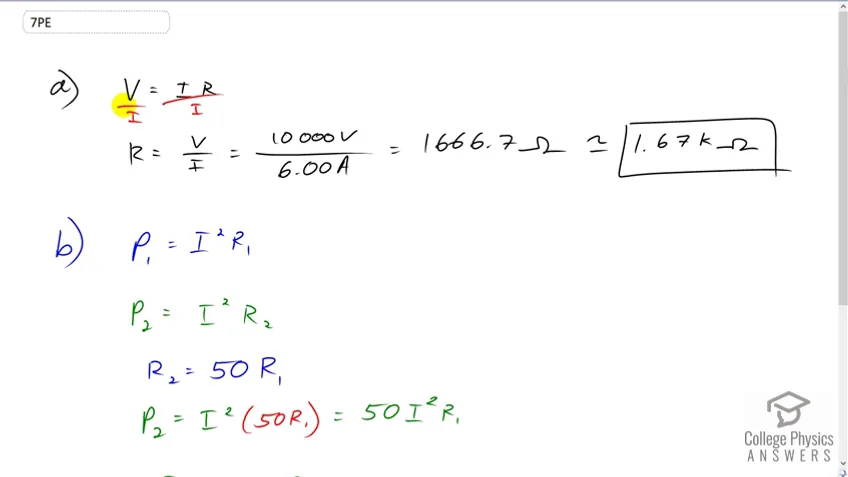 1:57PreviewProblem 7Full video with free trial(a) A defibrillator sends a 6.00-A current through the chest of a patient by applying a 10,000-V potential as in the figure below. What is the resistance of the path? (b) The defibrillator paddles make contact with the patient through a conducting gel that greatly reduces the path resistance. Discuss the difficulties that would ensue if a larger voltage were used to produce the same current through the patient, but with the path having perhaps 50 times the resistance. (Hint: The current must be about the same, so a higher voltage would imply greater power. Use this equation for power: )
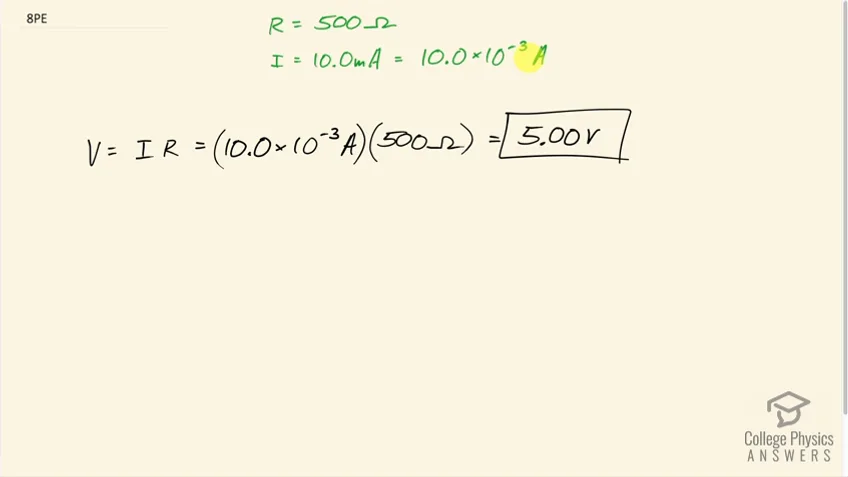 0:31PreviewProblem 8Full video with free trialDuring open-heart surgery, a defibrillator can be used to bring a patient out of cardiac arrest. The resistance of the path is and a 10.0 mA current is needed. What voltage should be applied?
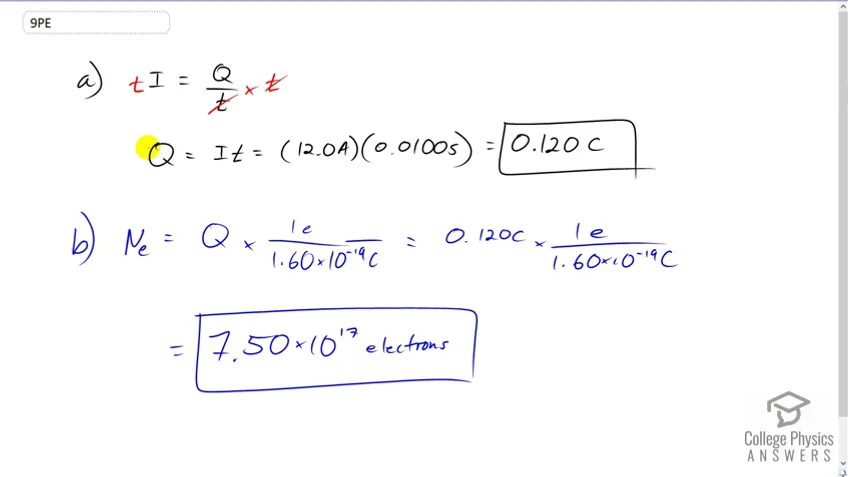 0:52PreviewProblem 9Full video with free trial(a) A defibrillator passes 12.0 A of current through the torso of a person for 0.0100 s. How much charge moves? (b) How many electrons pass through the wires connected to the patient? (See figure below.)
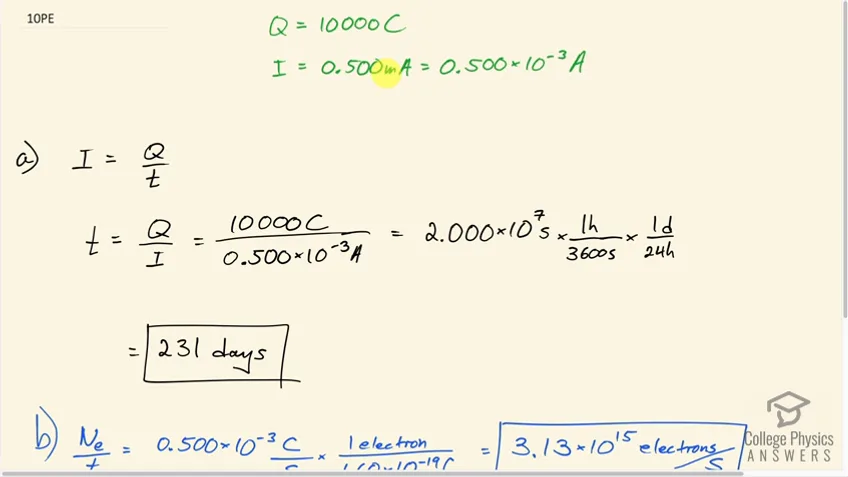 1:20PreviewProblem 10Full video with free trialA clock battery wears out after moving 10,000 C of charge through the clock at a rate of 0.500 mA. (a) How long did the clock run? (b) How many electrons per second flowed?
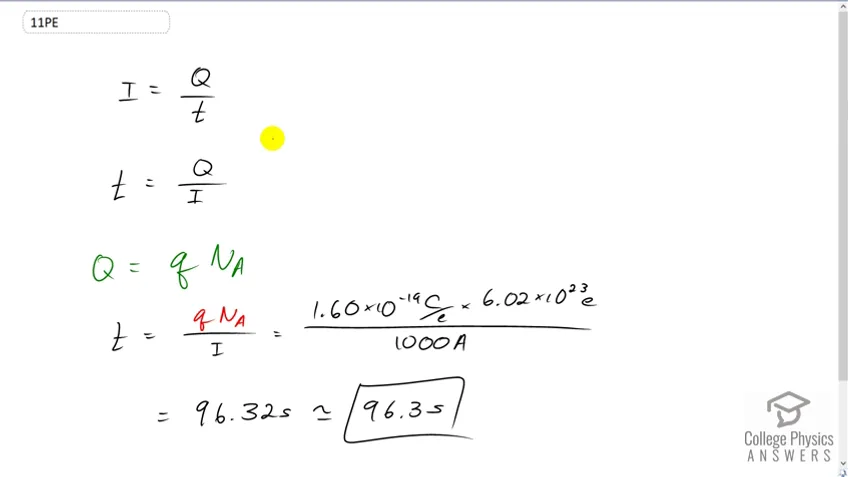 1:20PreviewProblem 11Full video with free trialThe batteries of a submerged non-nuclear submarine supply 1000 A at full speed ahead. How long does it take to move Avogadro's number ( ) of electrons at this rate?
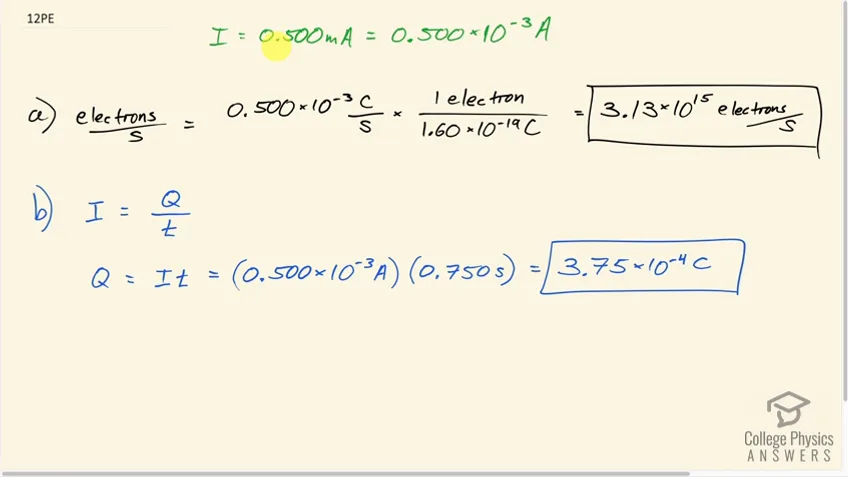 1:11PreviewProblem 12Full video with free trialElectron guns are used in X-ray tubes. The electrons are accelerated through a relatively large voltage and directed onto a metal target, producing X-rays. (a) How many electrons per second strike the target if the current is 0.500 mA? (b) What charge strikes the target in 0.750 s?
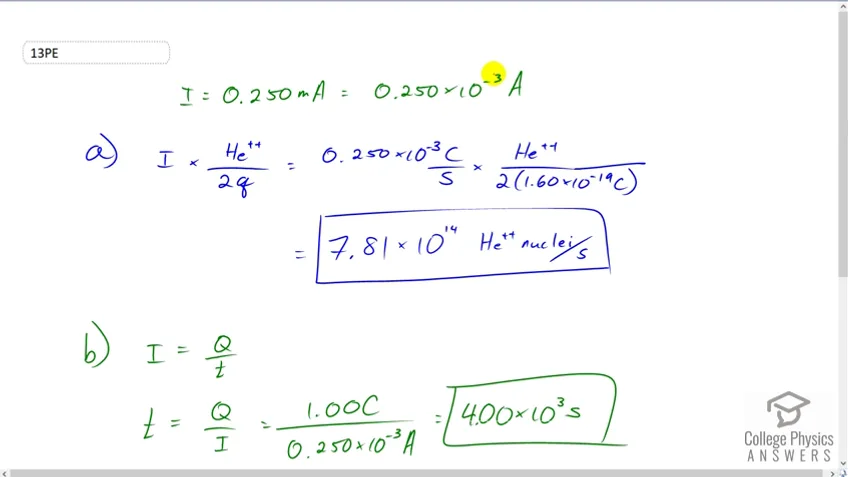 2:36PreviewProblem 13Full video with free trialA large cyclotron directs a beam of nuclei onto a target with a beam current of 0.250 mA. (a) How many nuclei per second is this? (b) How long does it take for 1.00 C to strike the target? (c) How long before 1.00 mol of nuclei strike the target?
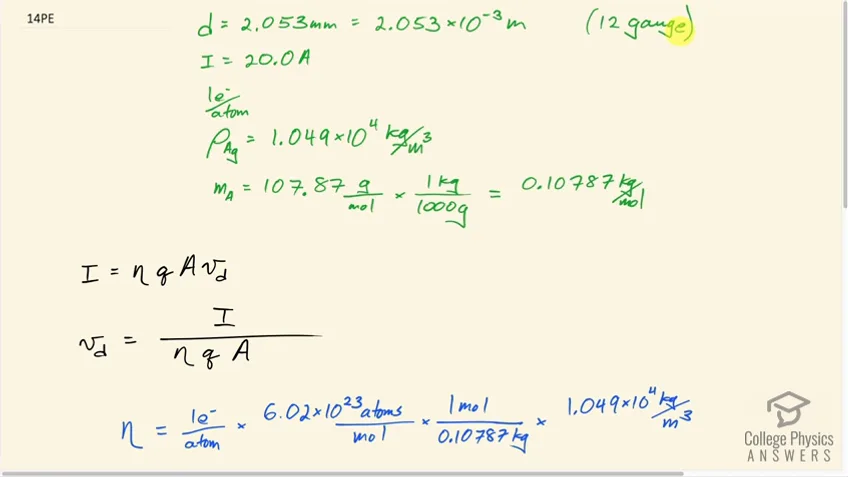 3:37PreviewProblem 14Full video with free trialRepeat Example 20.3, but for a wire made of silver and given there is one free electron per silver atom.
Example 20.3 Calculate the drift velocity of electrons in a 12-gauge copper wire (which has a diameter of 2.053 mm) carrying a 20.0-A current, given that there is one free electron per copper atom. (Household wiring often contains 12-gauge copper wire, and the maximum current allowed in such wire is usually 20 A.)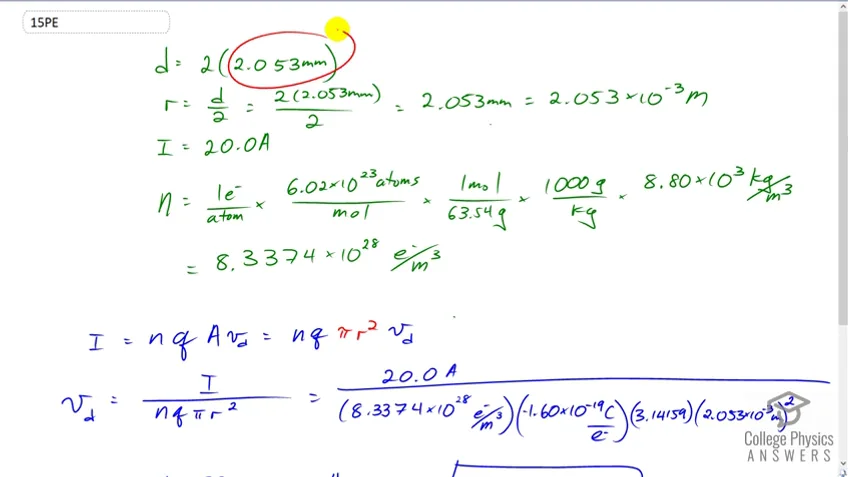 3:22PreviewProblem 15Full video with free trialUsing the results of Example 20.3, find the drift velocity in a copper wire of twice the diameter and carrying 20.0 A.
Example 20.3: Calculate the drift velocity of electrons in a 12-gauge copper wire (which has a diameter of 2.053 mm) carrying a 20.0-A current, given that there is one free electron per copper atom. (Household wiring often contains 12-gauge copper wire, and the maximum current allowed in such wire is usually 20 A.) The density of copper is .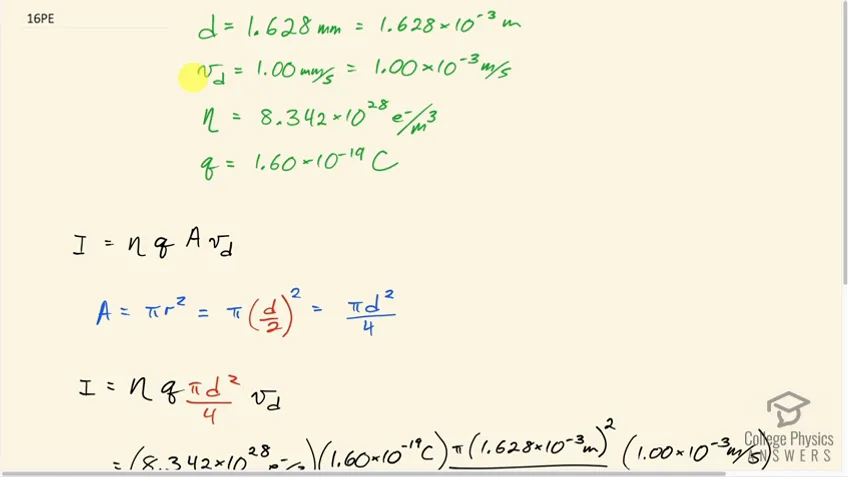 1:42PreviewProblem 16Full video with free trialA 14-gauge copper wire has a diameter of 1.628 mm. What magnitude current flows when the drift velocity is 1.00 mm/s? (See Example 20.3 for useful information.)
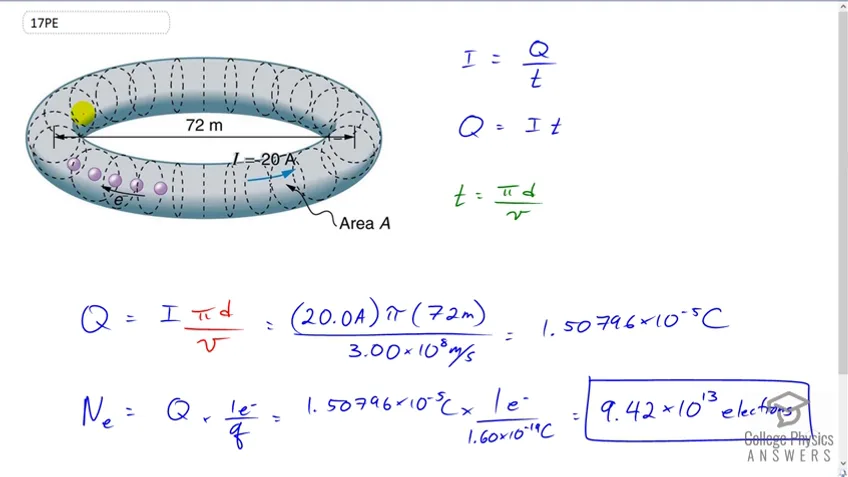 1:55PreviewProblem 17Full video with free trialSPEAR, a storage ring about 72.0 m in diameter at the Stanford Linear Accelerator (closed in 2009), has a 20.0-A circulating beam of electrons that are moving at nearly the speed of light. (See Figure 20.39.) How many electrons are in the beam?
20.2 Ohm's Law: Resistance and Simple Circuits
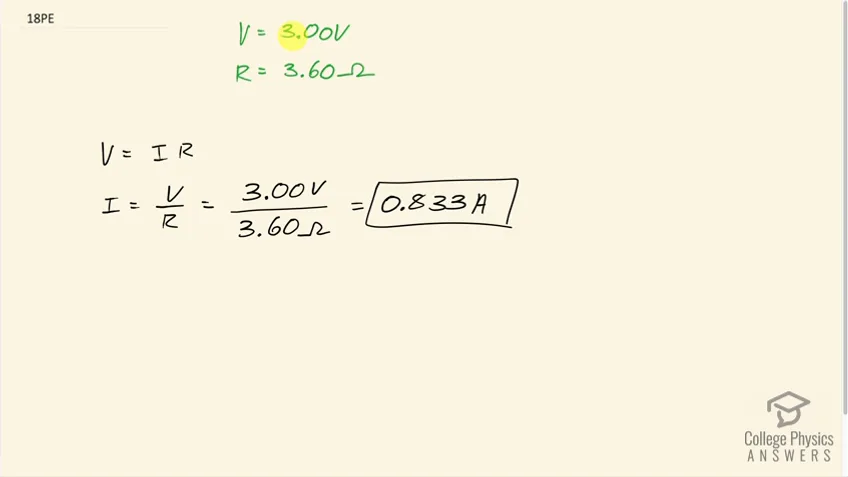 0:27PreviewProblem 18Full video with free trialWhat current flows through the bulb of a 3.00-V flashlight when its hot resistance is ?
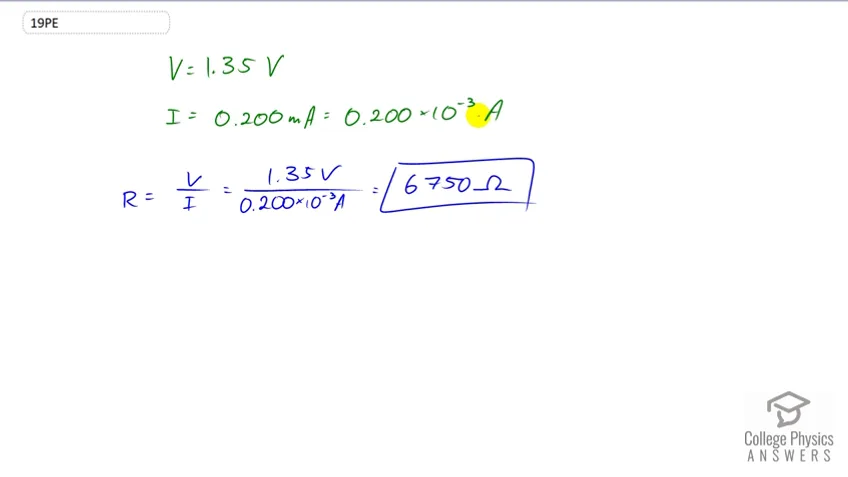 0:21PreviewProblem 19Full video with free trialCalculate the effective resistance of a pocket calculator that has a 1.35-V battery and through which 0.200 mA flows.
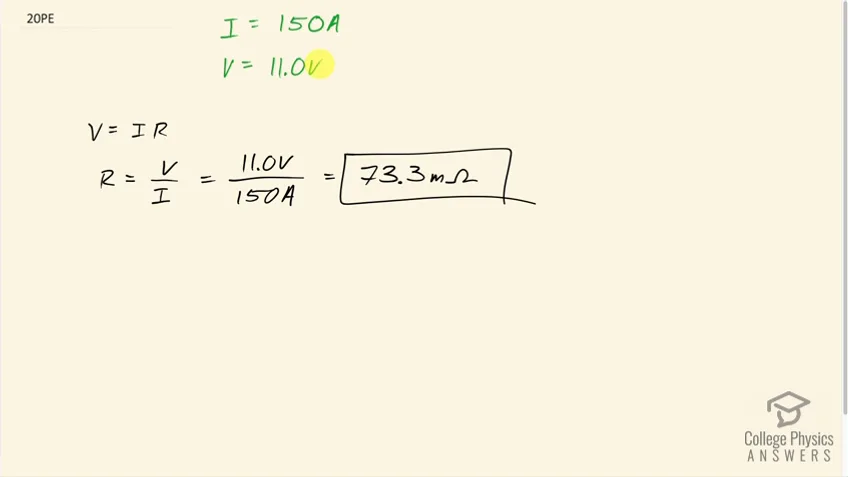 0:31PreviewProblem 20Full video with free trialWhat is the effective resistance of a car’s starter motor when 150 A flows through it as the car battery applies 11.0 V to the motor?
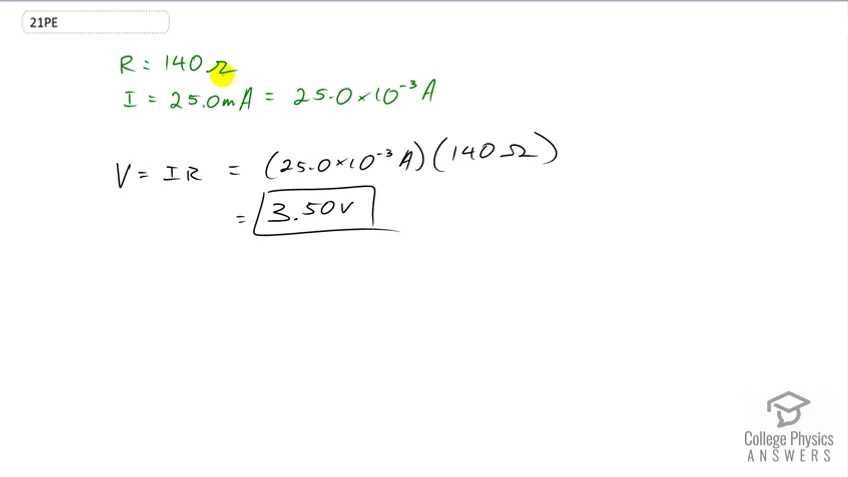 0:31PreviewProblem 21Full video with free trialHow many volts are supplied to operate an indicator light on a DVD player that has a resistance of , given that 25.0 mA passes through it?
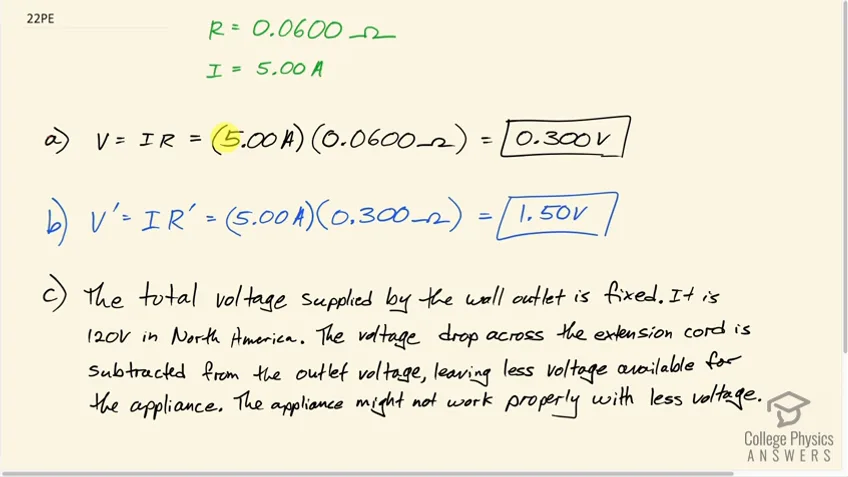 1:58PreviewProblem 22Full video with free trial(a) Find the voltage drop in an extension cord having a resistance and through which 5.00 A is flowing. (b) A cheaper cord utilizes thinner wire and has a resistance of . What is the voltage drop in it when 5.00 A flows? (c) Why is the voltage to whatever appliance is being used reduced by this amount? What is the effect on the appliance?
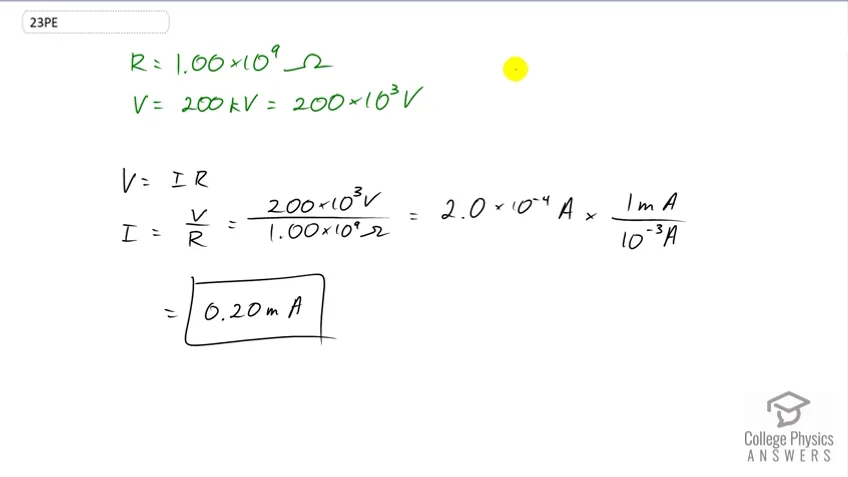 0:55PreviewProblem 23Full video with free trialA power transmission line is hung from metal towers with glass insulators having a resistance of What current flows through the insulator if the voltage is 200 kV? (Some high-voltage lines are DC.)
20.3 Resistance and Resistivity
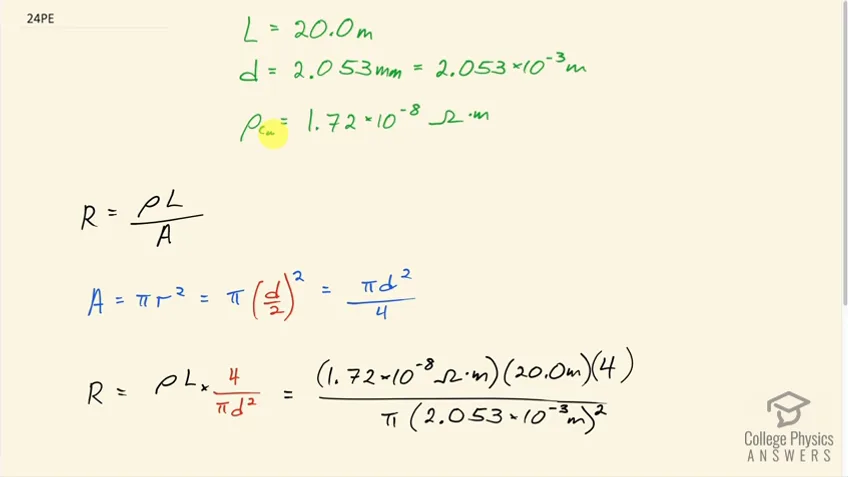 1:46PreviewProblem 24Full video with free trialWhat is the resistance of a 20.0-m-long piece of 12-gauge copper wire having a 2.053-mm diameter?
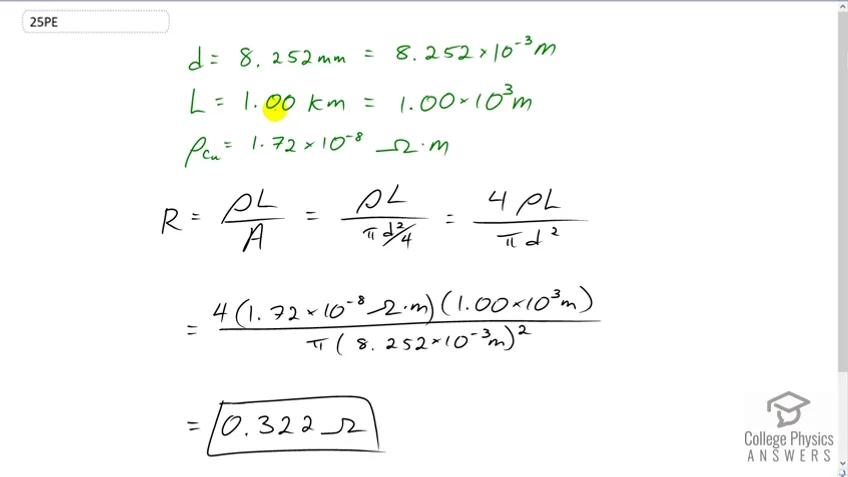 1:19PreviewProblem 25Full video with free trialThe diameter of 0-gauge copper wire is 8.252 mm. Find the resistance of a 1.00-km length of such wire used for power transmission.
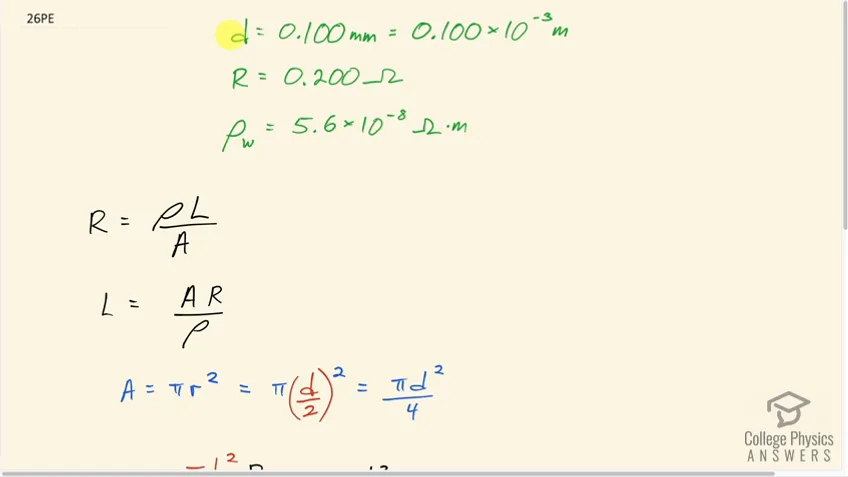 2:13PreviewProblem 26Full video with free trialIf the 0.100-mm diameter tungsten filament in a light bulb is to have a resistance of at , how long should it be?
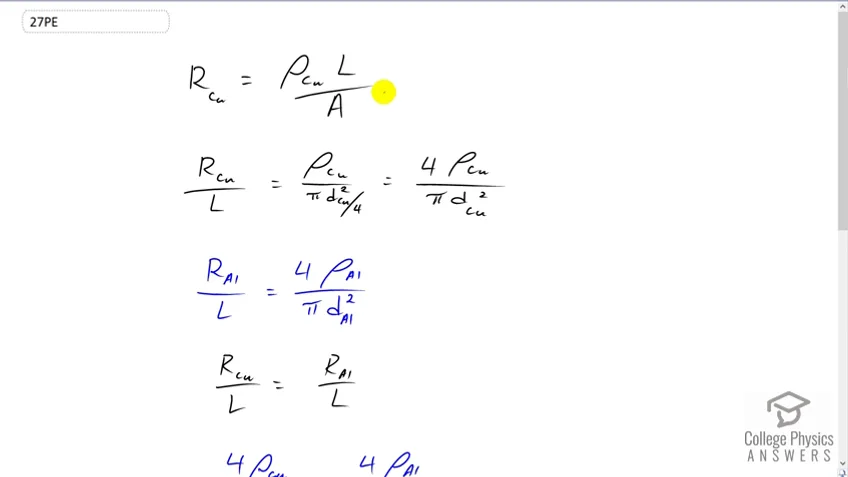 3:01PreviewProblem 27Full video with free trialFind the ratio of the diameter of aluminum to copper wire, if they have the same resistance per unit length (as they might in household wiring).
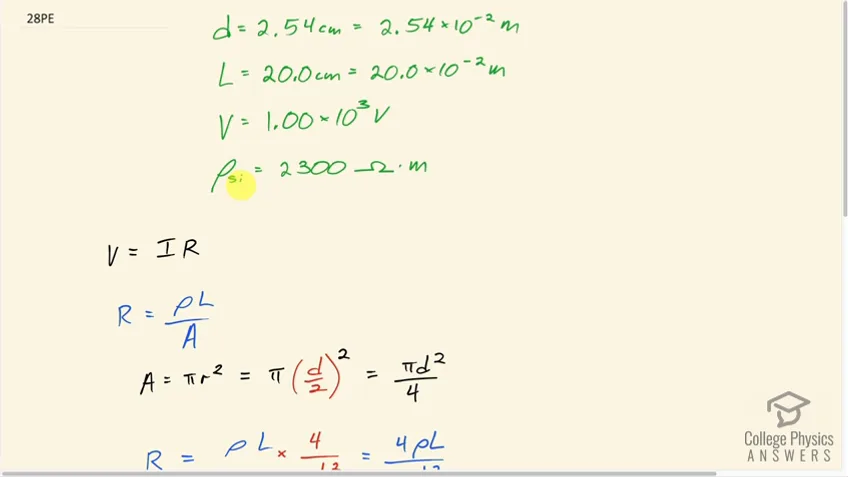 2:42PreviewProblem 28Full video with free trialWhat current flows through a 2.54-cm-diameter rod of pure silicon that is 20.0 cm long, when is applied to it? (Such a rod may be used to make nuclear- particle detectors, for example.)
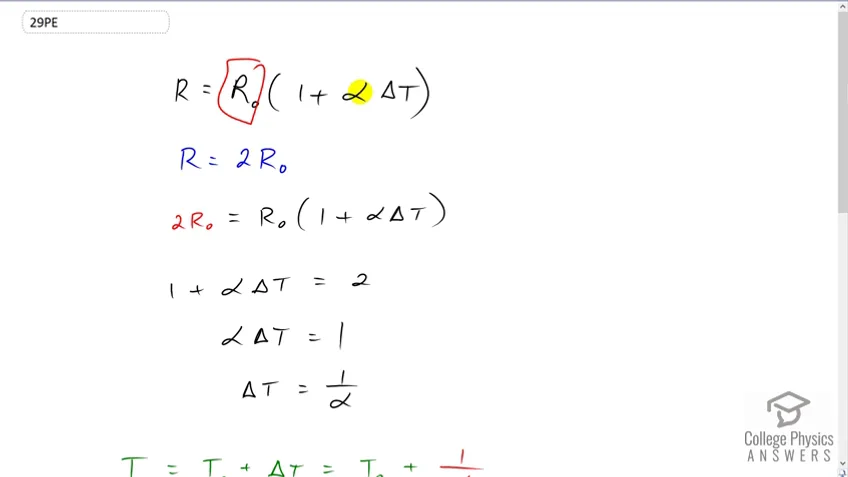 2:32PreviewProblem 29Full video with free trial(a) To what temperature must you raise a copper wire, originally at , to double its resistance, neglecting any changes in dimensions? (b) Does this happen in household wiring under ordinary circumstances?
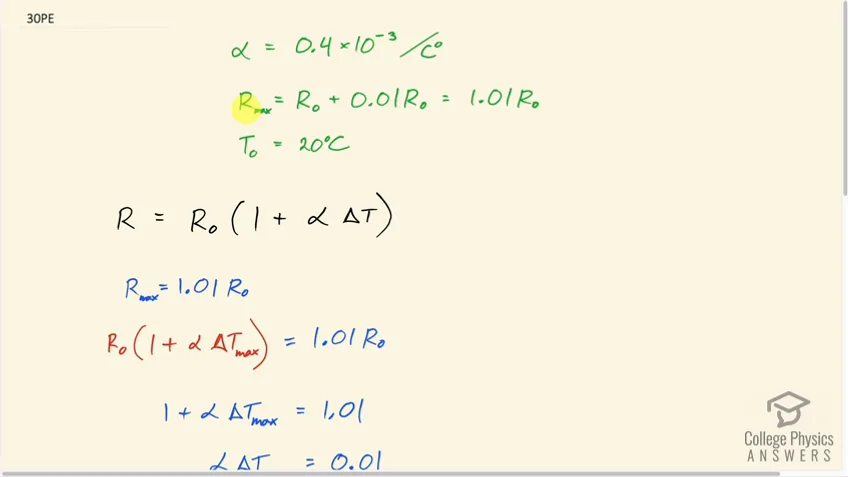 3:39PreviewProblem 30Full video with free trialA resistor made of Nichrome wire is used in an application where its resistance cannot change more than 1.00% from its value at . Over what temperature range can it be used?
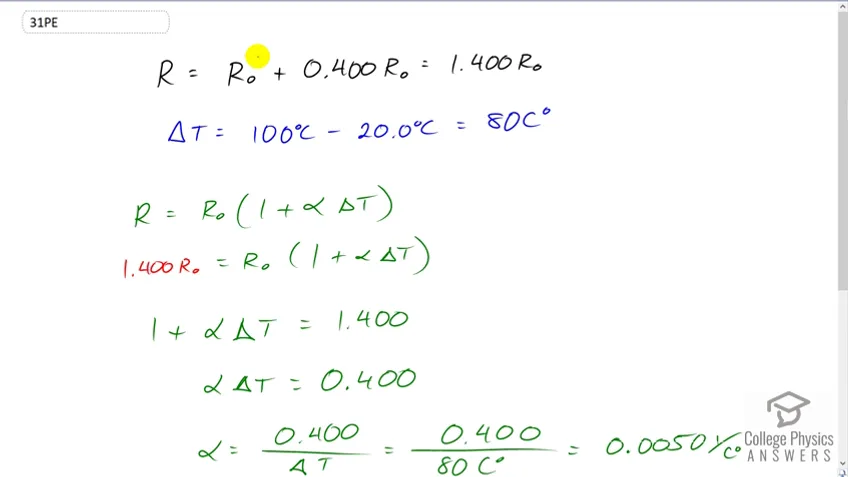 1:38PreviewProblem 31Full video with free trialOf what material is a resistor made if its resistance is 40.0% greater at than at ?
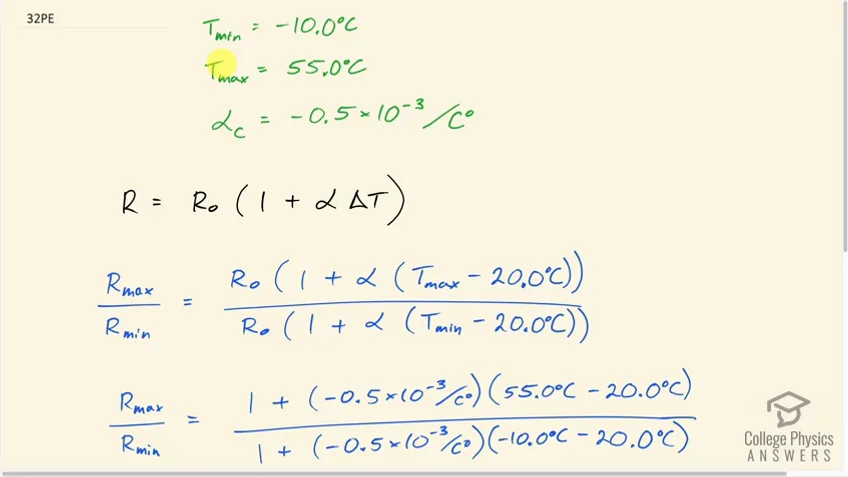 3:08PreviewProblem 32Full video with free trialAn electronic device designed to operate at any temperature in the range from to contains pure carbon resistors. By what factor does their resistance increase over this range?
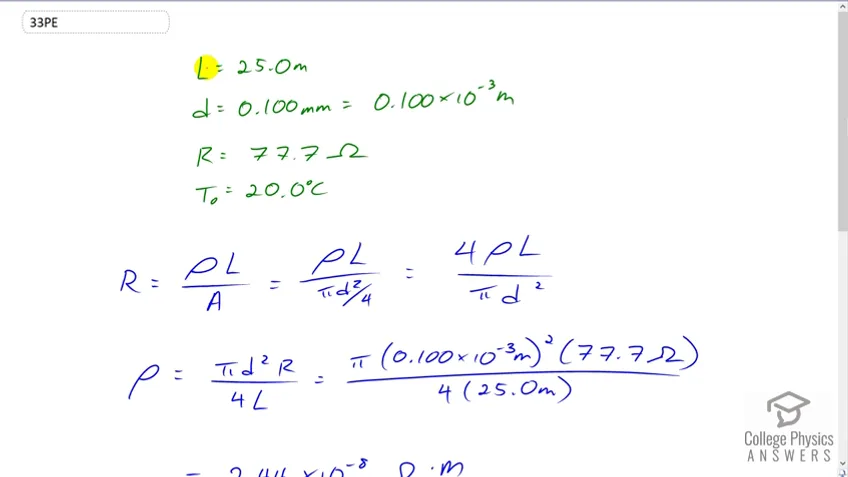 2:20PreviewProblem 33Full video with free trial(a) Of what material is a wire made, if it is 25.0 m long with a 0.100 mm diameter and has a resistance of at ? (b) What is its resistance at ?
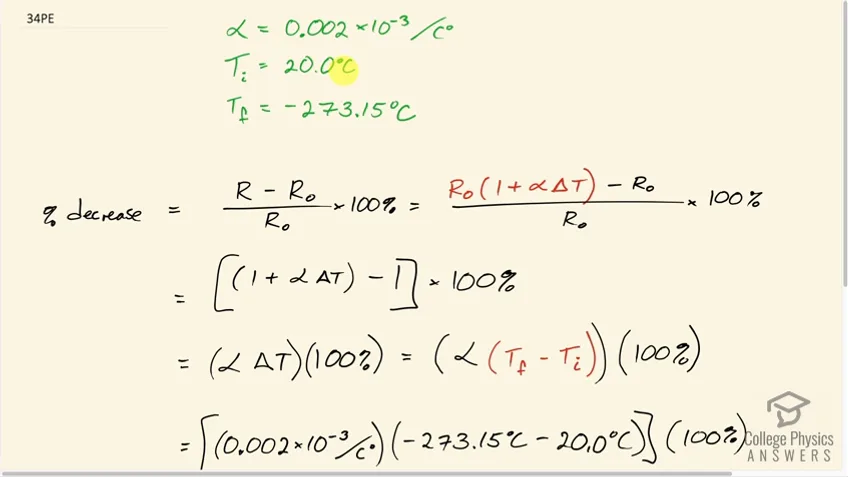 2:57PreviewProblem 34Full video with free trialAssuming a constant temperature coefficient of resistivity, what is the maximum percent decrease in the resistance of a constantan wire starting at ?
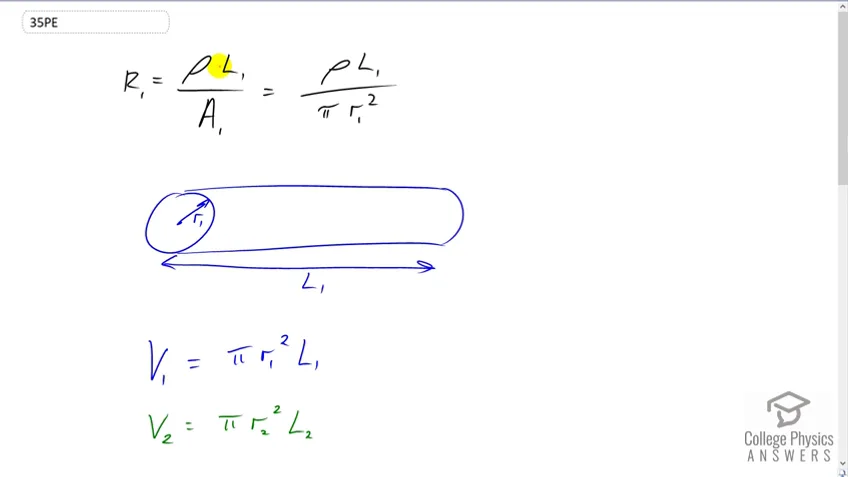 3:31PreviewProblem 35Full video with free trialA wire is drawn through a die, stretching it to four times its original length. By what factor does its resistance increase?
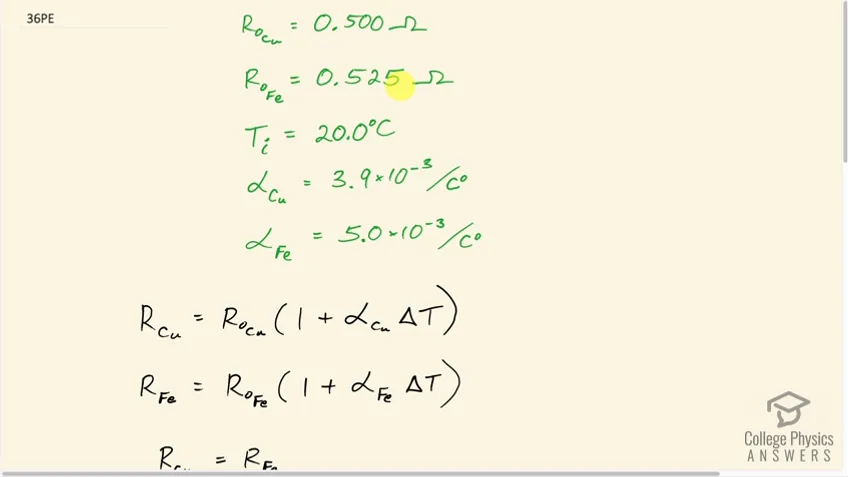 3:22PreviewProblem 36Full video with free trialA copper wire has a resistance of at , and an iron wire has a resistance of at the same temperature. At what temperature are their resistances equal?
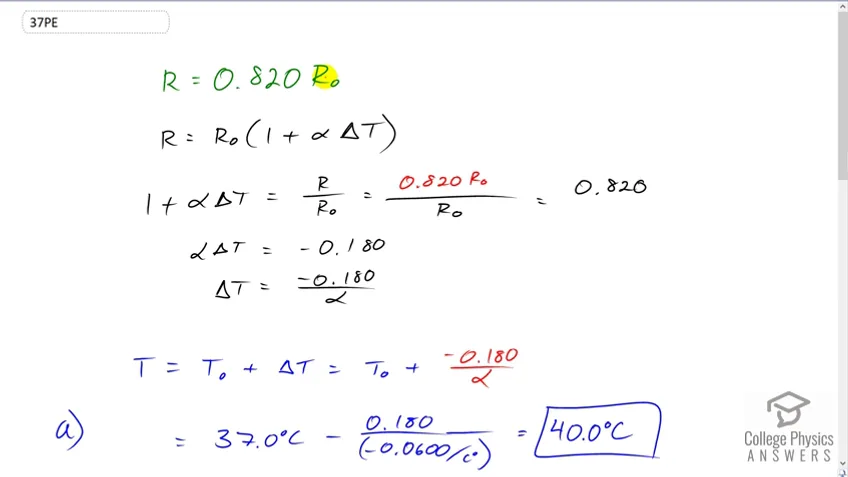 4:01PreviewProblem 37Full video with free trial(a) Digital medical thermometers determine temperature by measuring the resistance of a semiconductor device called a thermistor (which has ) when it is at the same temperature as the patient. What is a patient's temperature if the thermistor's resistance at that temperature is 82.0% of its value at (normal body temperature)? (b) The negative value for may not be maintained for very low temperatures. Discuss why and whether this is the case here. (Hint: Resistance can't become negative.)
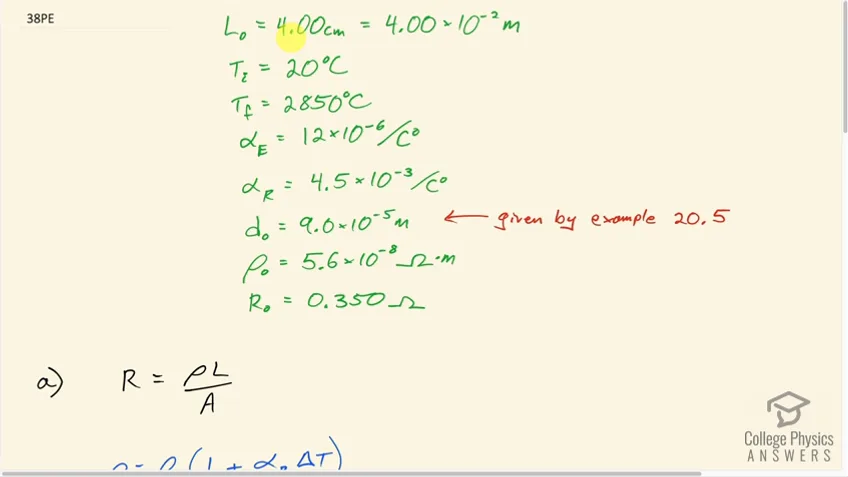 6:42PreviewProblem 38Full video with free trial(a) Redo Example 20.6 taking into account the thermal expansion of the tungsten filament. You may assume a thermal expansion coefficient of . (b) By what percentage does your answer differ from that in the example?
Example 20.6: Although caution must be used in applying and for temperature changes greater than , for tungsten the equations work reasonably well for very large temperature changes. What, then, is the resistance of the tungsten filament in the previous example if its temperature is increased from room temperature ( ) to a typical operating temperature of ?
Example 20.5: A car headlight filament is made of tungsten and has a cold resistance of . If the filament is a cylinder 4.00 cm long (it may be coiled to save space), what is its diameter? Solution: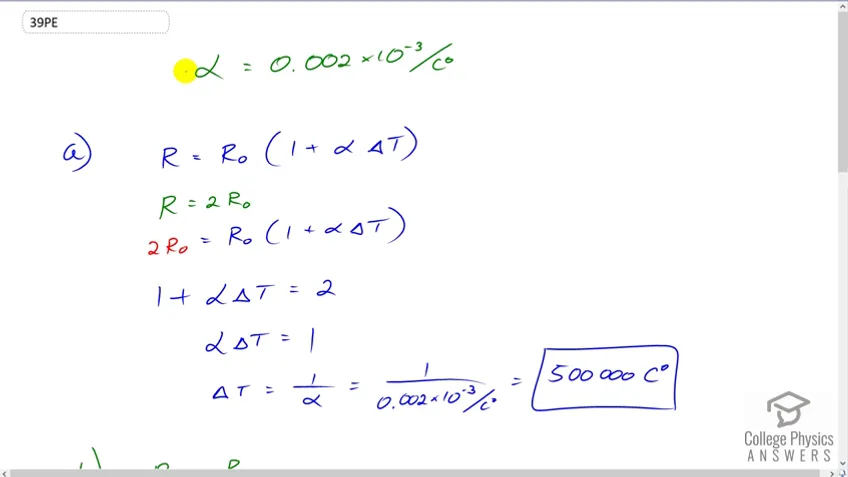 2:45PreviewProblem 39Full video with free trial(a) To what temperature must you raise a resistor made of constantan to double its resistance, assuming a constant temperature coefficient of resistivity? (b) To cut it in half? (c) What is unreasonable about these results? (d) Which assumptions are unreasonable, or which premises are inconsistent?
20.4 Electric Power and Energy
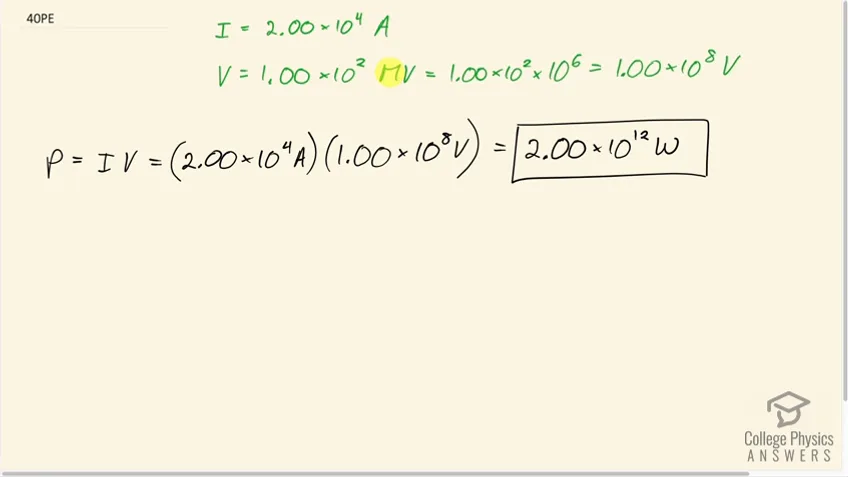 0:29PreviewProblem 40Full video with free trialWhat is the power of a lightening bolt having a current of
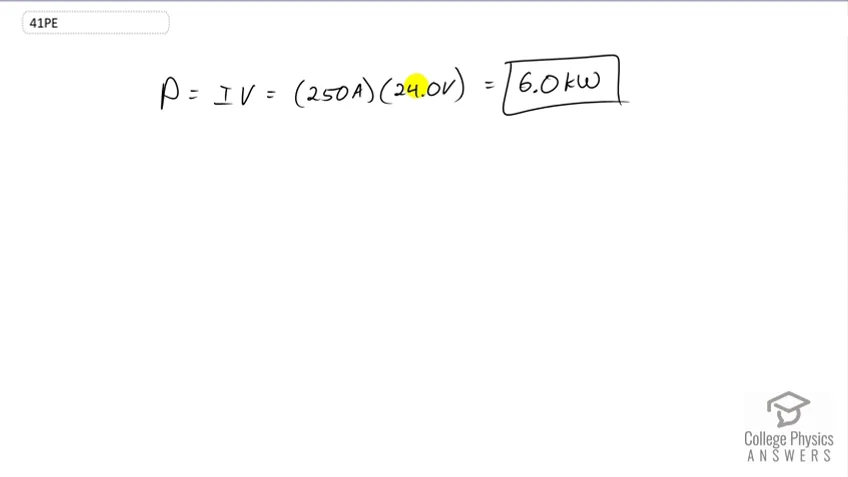 0:16PreviewProblem 41Full video with free trialWhat power is supplied to the starter motor of a large truck that draws 250 A of current from a 24.0-V battery hookup?
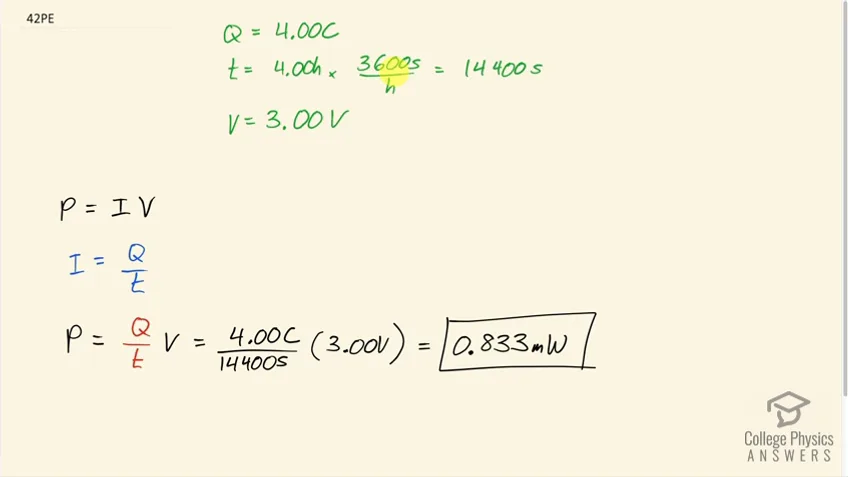 1:06PreviewProblem 42Full video with free trialA charge of 4.00 C of charge passes through a pocket calculator’s solar cells in 4.00 h. What is the power output, given the calculator’s voltage output is 3.00 V? (See Figure 20.40.)
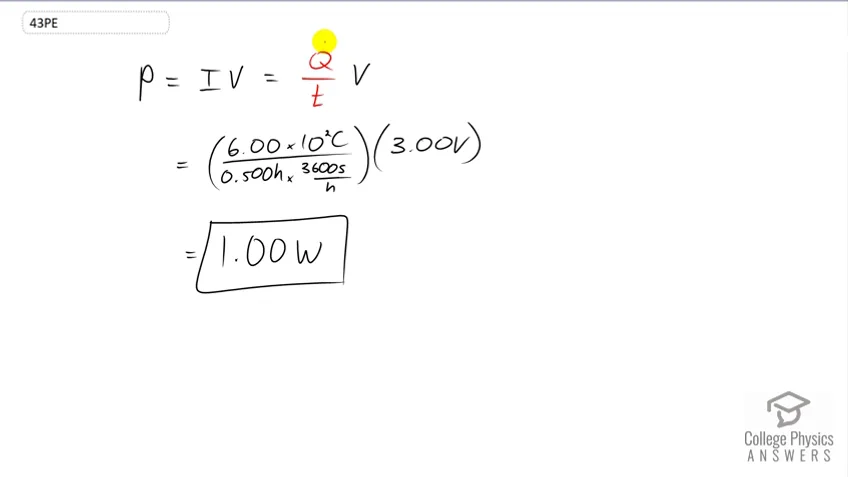 0:33PreviewProblem 43Full video with free trialHow many watts does a flashlight that has pass through it in 0.500 h use if its voltage is 3.00 V?
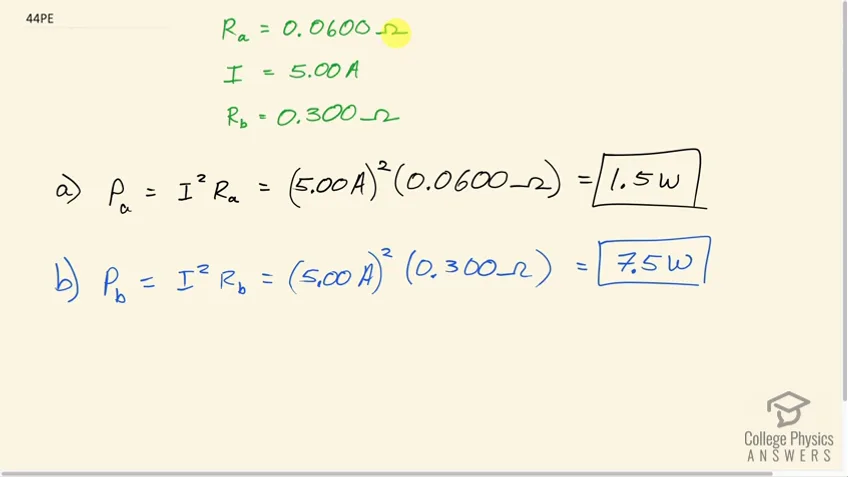 0:54PreviewProblem 44Full video with free trialFind the power dissipated in each of these extension cords: (a) an extension cord having a resistance and through which 5.00 A is flowing; (b) a cheaper cord utilizing thinner wire and with a resistance of .
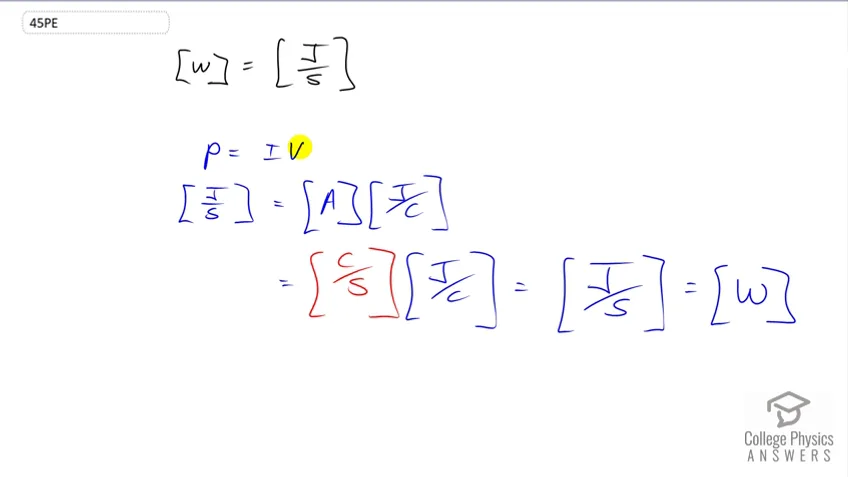 0:38PreviewProblem 45Full video with free trialVerify that the units of a volt-ampere are watts, as implied by the equation .
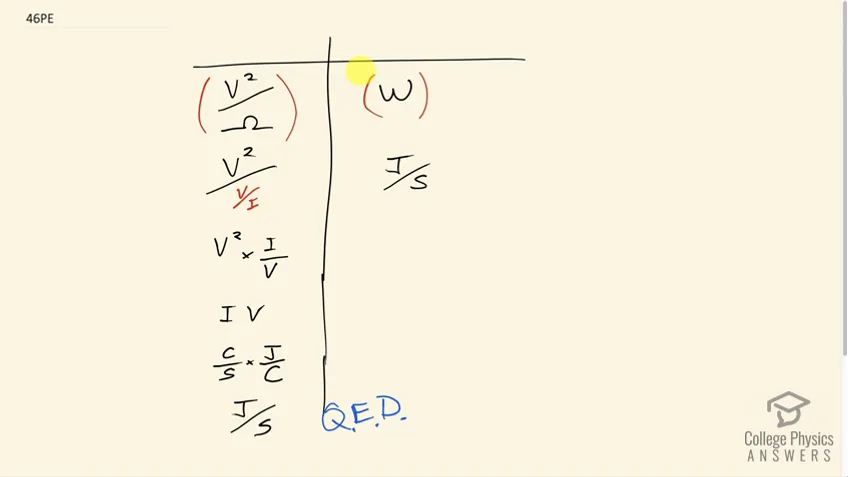 1:26PreviewProblem 46Full video with free trialShow that the units , as implied by the equation .
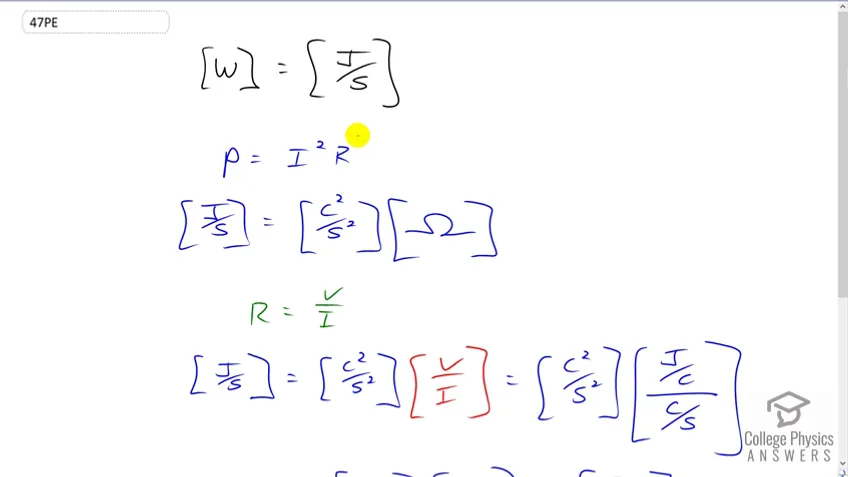 1:12PreviewProblem 47Full video with free trialShow that the units , as implied by the equation .
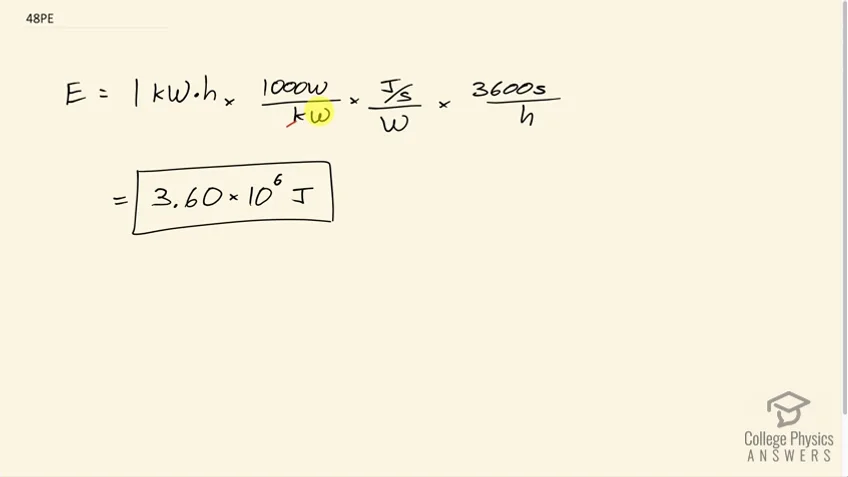 1:01PreviewProblem 48Full video with free trialVerify the energy unit equivalence that .
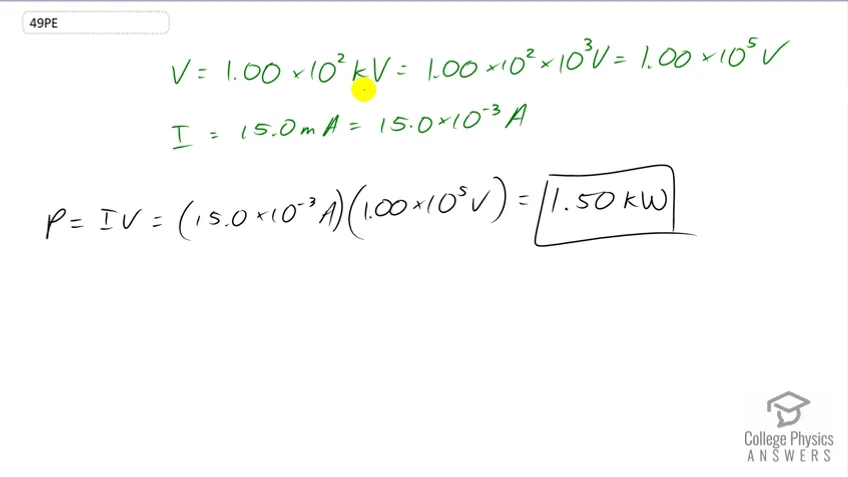 0:37PreviewProblem 49Full video with free trialElectrons in an X-ray tube are accelerated through and directed toward a target to produce X-rays. Calculate the power of the electron beam in this tube if it has a current of 15.0 mA.
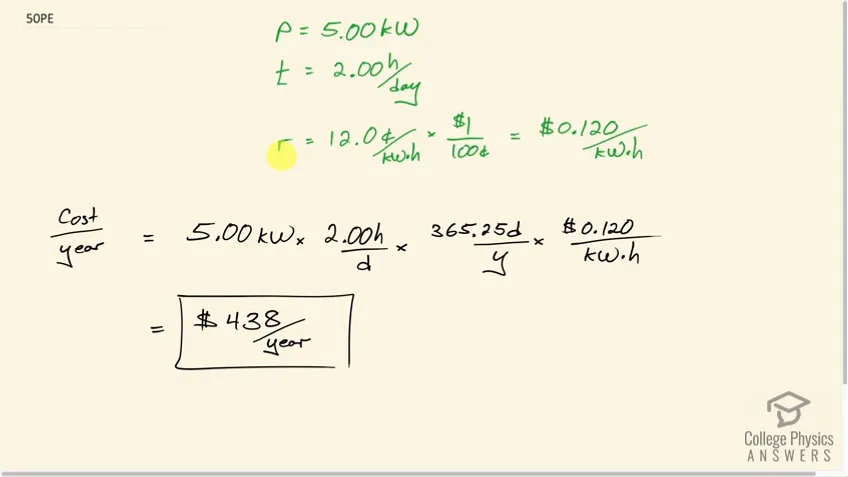 1:12PreviewProblem 50Full video with free trialAn electric water heater consumes 5.00 kW for 2.00 h per day. What is the cost of running it for one year if electricity costs ? See Figure 20.41.
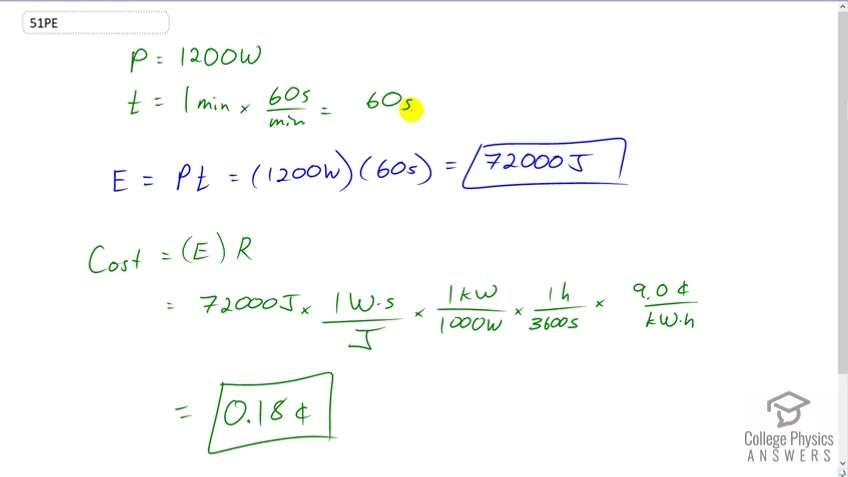 1:30PreviewProblem 51Full video with free trialWith a 1200-W toaster, how much electrical energy is needed to make a slice of toast (cooking time = 1 minute)? At , how much does this cost?
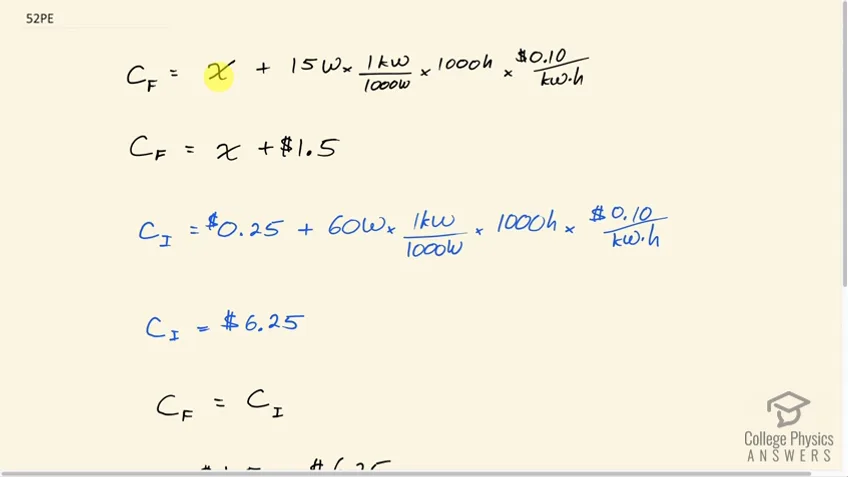 2:17PreviewProblem 52Full video with free trialWhat would be the maximum cost of a CFL such that the total cost (investment plus operating) would be the same for both CFL and incandescent 60-W bulbs? Assume the cost of the incandescent bulb is 25 cents and that electricity costs 10 cents/kWh. Calculate the cost for 1000 hours, as in the cost effectiveness of CFL example.
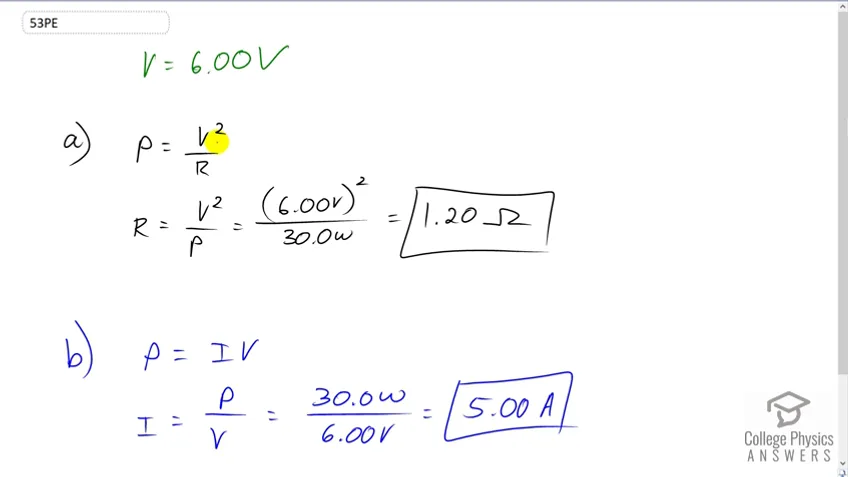 1:52PreviewProblem 53Full video with free trialSome makes of older cars have 6.00-V electrical systems. (a) What is the hot resistance of a 30.0-W headlight in such a car? (b) What current flows through it?
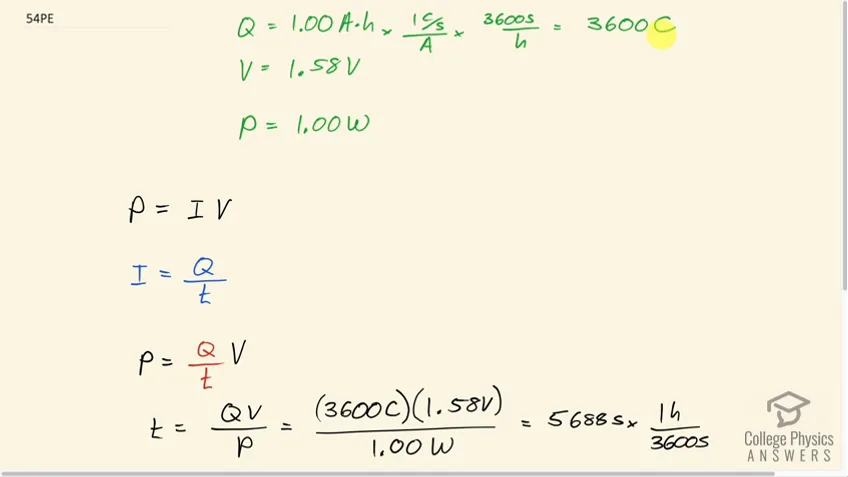 1:28PreviewProblem 54Full video with free trialAlkaline batteries have the advantage of putting out constant voltage until very nearly the end of their life. How long will an alkaline battery rated at and 1.58 V keep a 1.00-W flashlight bulb burning?
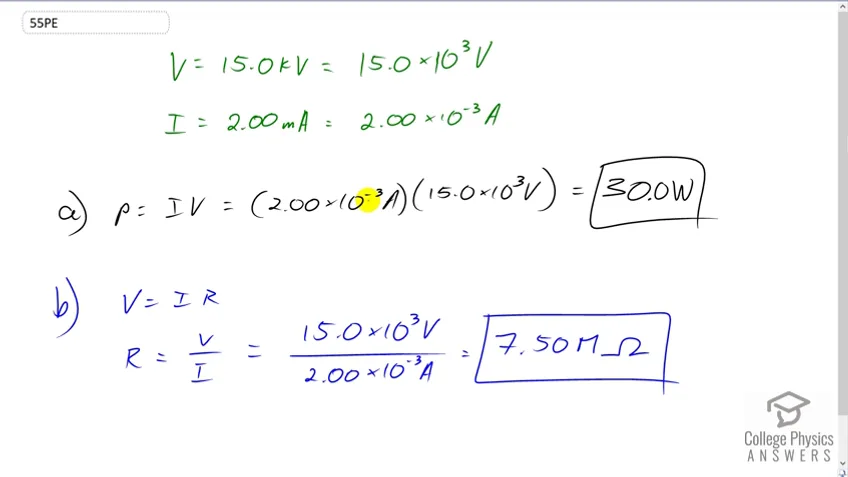 0:43PreviewProblem 55Full video with free trialA cauterizer, used to stop bleeding in surgery, puts out 2.00 mA at 15.0 kV. (a) What is its power output? (b) What is the resistance of the path?
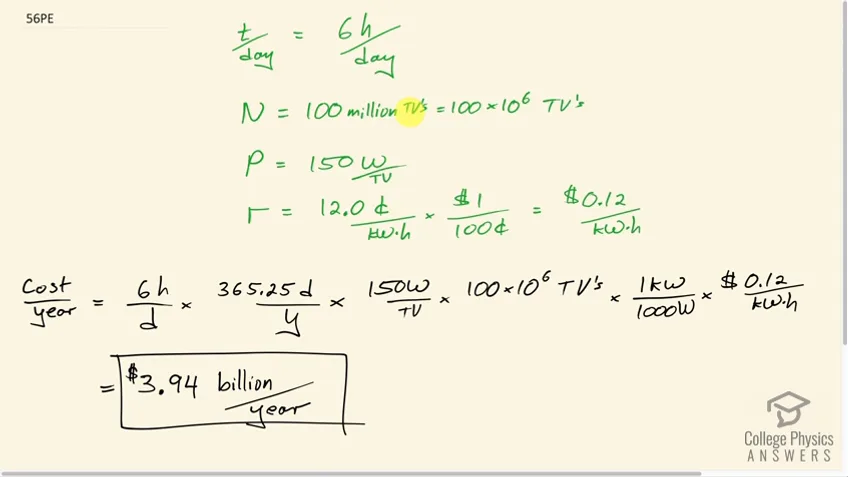 1:39PreviewProblem 56Full video with free trialThe average television is said to be on 6 hours per day. Estimate the yearly cost of electricity to operate 100 million TVs, assuming their power consumption averages 150 W and the cost of electricity averages .
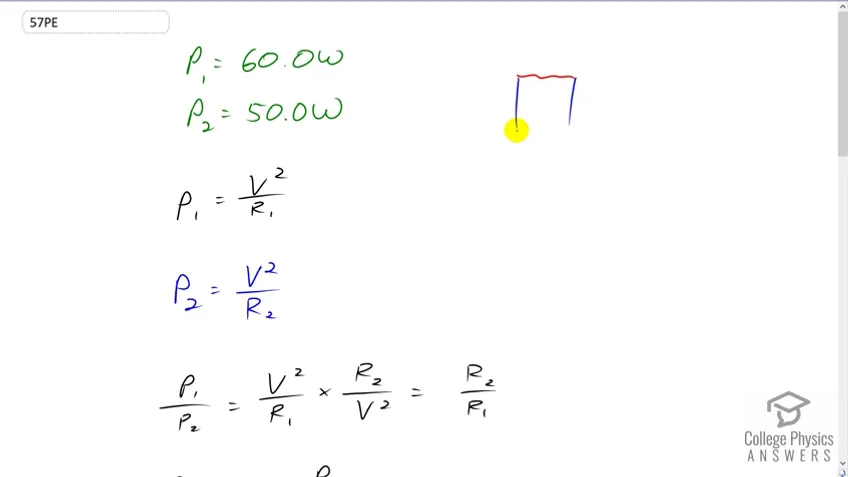 3:38PreviewProblem 57Full video with free trialAn old light bulb draws only 50.0 W, rather than its original 60.0 W, due to evaporative thinning of its filament. By what factor is its diameter reduced, assuming uniform thinning along its length? Neglect any effects caused by temperature differences.
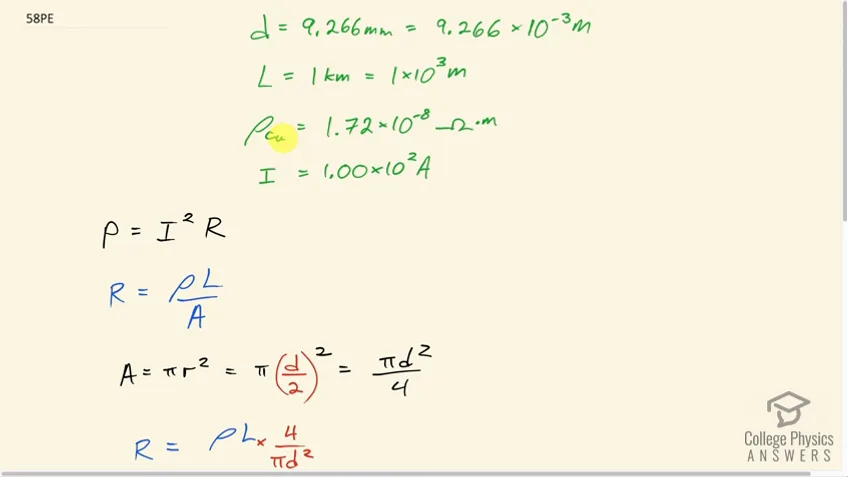 2:01PreviewProblem 58Full video with free trial00-gauge copper wire has a diameter of 9.266 mm. Calculate the power loss in a kilometer of such wire when it carries .
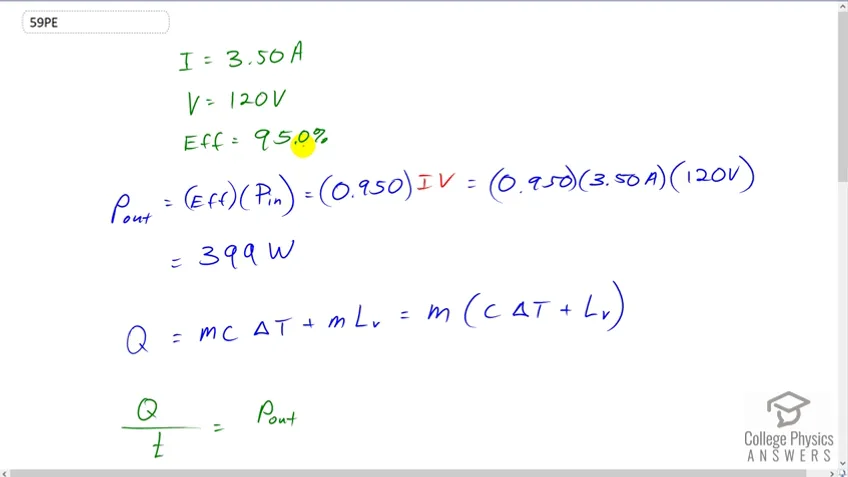 4:48PreviewProblem 59Full video with free trialCold vaporizers pass a current through water, evaporating it with only a small increase in temperature. One such home device is rated at 3.50 A and utilizes 120 V AC with 95.0% efficiency. (a) What is the vaporization rate in grams per minute? (b) How much water must you put into the vaporizer for 8.00 h of overnight operation? (See Figure 20.42.)
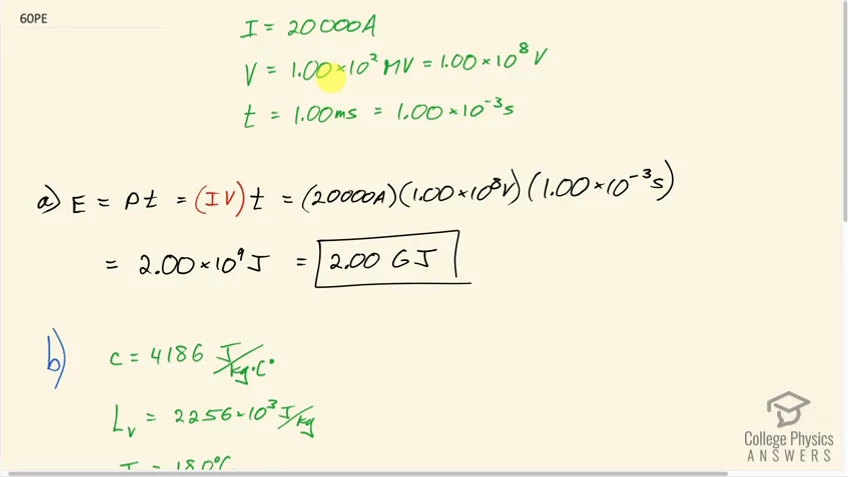 2:45PreviewProblem 60Full video with free trial(a) What energy is dissipated by a lightning bolt having a 20,000-A current, a voltage of , and a length of 1.00 ms? (b) What mass of tree sap could be raised from to its boiling point and then evaporated by this energy, assuming sap has the same thermal characteristics as water?
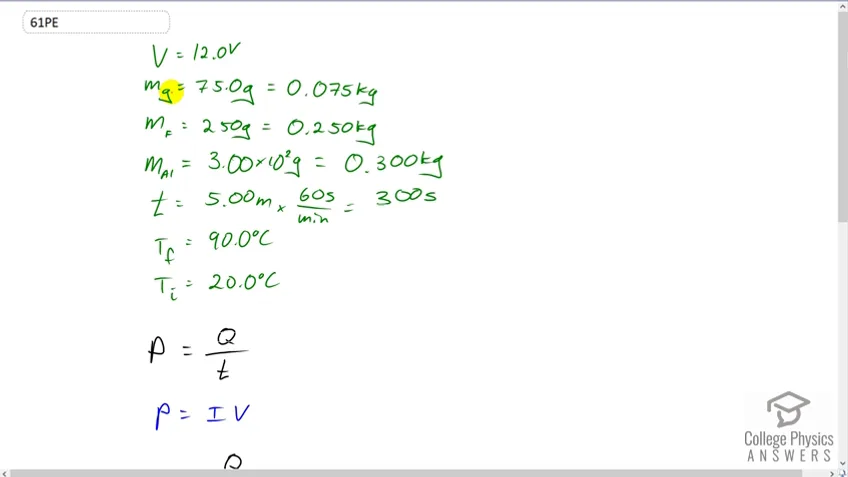 3:17PreviewProblem 61Full video with free trialWhat current must be produced by a 12.0-V battery-operated bottle warmer in order to heat 75.0 g of glass, 250 g of baby formula, and of aluminum from to in 5.00 min?
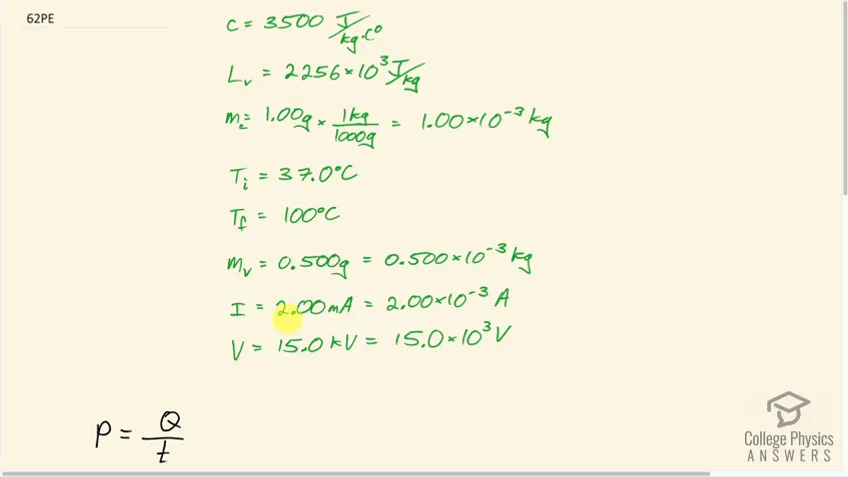 3:56PreviewProblem 62Full video with free trialHow much time is needed for a surgical cauterizer to raise the temperature of 1.00 g of tissue from to and then boil away 0.500 g of water, if it puts out 2.00 mA at 15.0 kV? Ignore heat transfer to the surroundings.
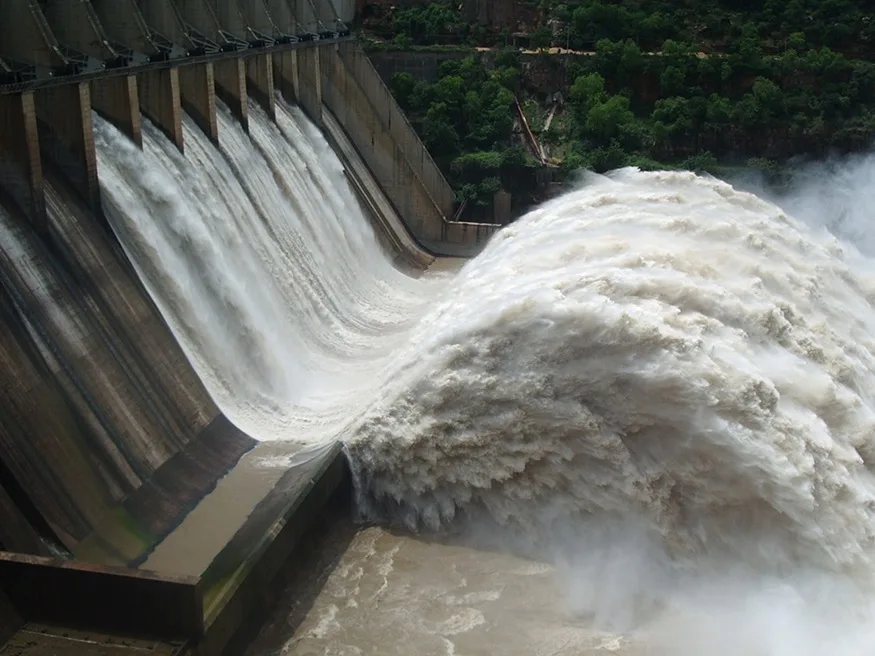
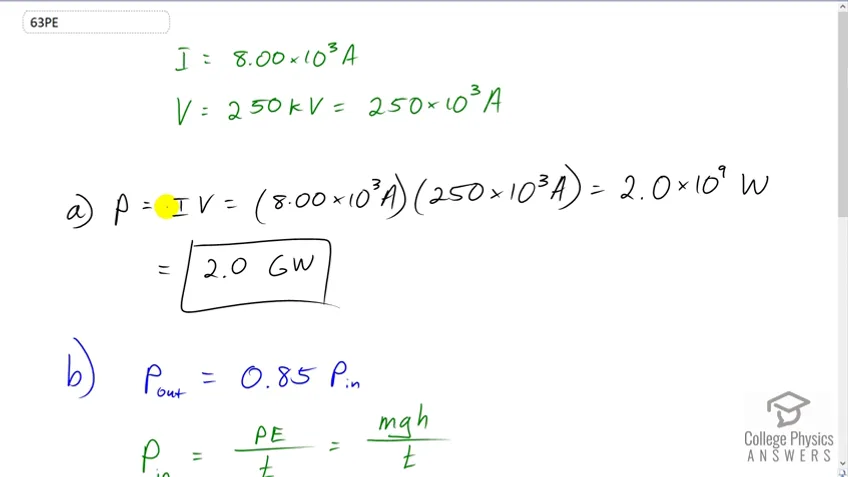 3:48PreviewProblem 63Full video with free trialHydroelectric generators (see Figure 20.43) at Hoover Dam produce a maximum current of at 250 kV. (a) What is the power output? (b) The water that powers the generators enters and leaves the system at low speed (thus its kinetic energy does not change) but loses 160 m in altitude. How many cubic meters per second are needed, assuming 85.0% efficiency?
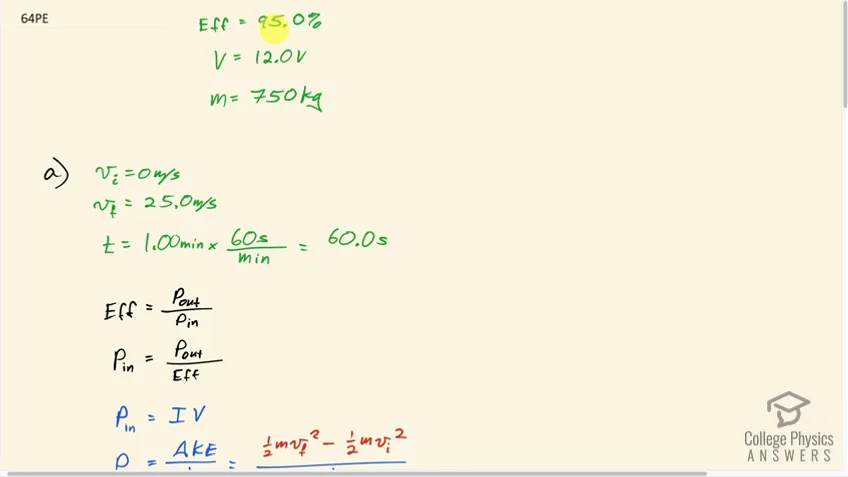 6:40PreviewProblem 64Full video with free trial(a) Assuming 95.0% efficiency for the conversion of electrical power by the motor, what current must the 12.0-V batteries of a 750-kg electric car be able to supply: (a) To accelerate from rest to 25.0 m/s in 1.00 min? (b) To climb a high hill in 2.00 min at a constant 25.0-m/s speed while exerting of force to overcome air resistance and friction? (c) To travel at a constant 25.0-m/s speed, exerting a force to overcome air resistance and friction? See Figure 20.44.
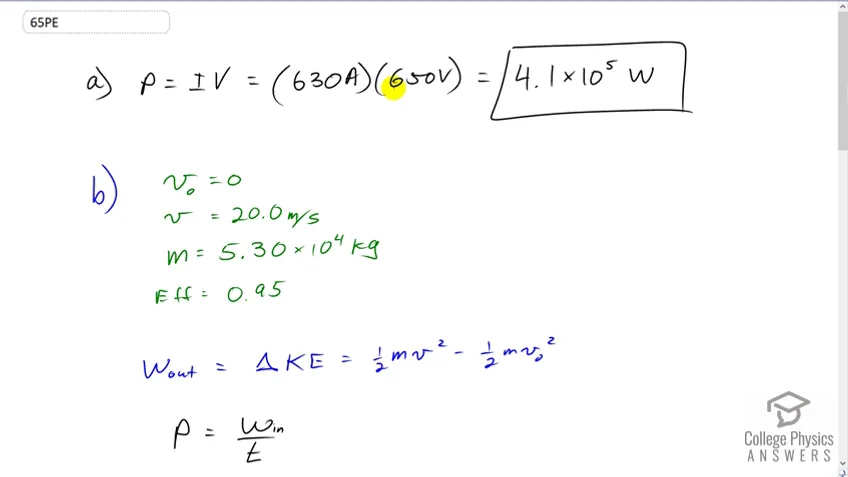 3:56PreviewProblem 65Full video with free trialA light-rail commuter train draws 630 A of 650-V DC electricity when accelerating. (a) What is its power consumption rate in kilowatts? (b) How long does it take to reach 20.0 m/s starting from rest if its loaded mass is , assuming 95.0% efficiency and constant power? (c) Find its average acceleration. (d) Discuss how the acceleration you found for the light-rail train compares to what might be typical for an automobile.
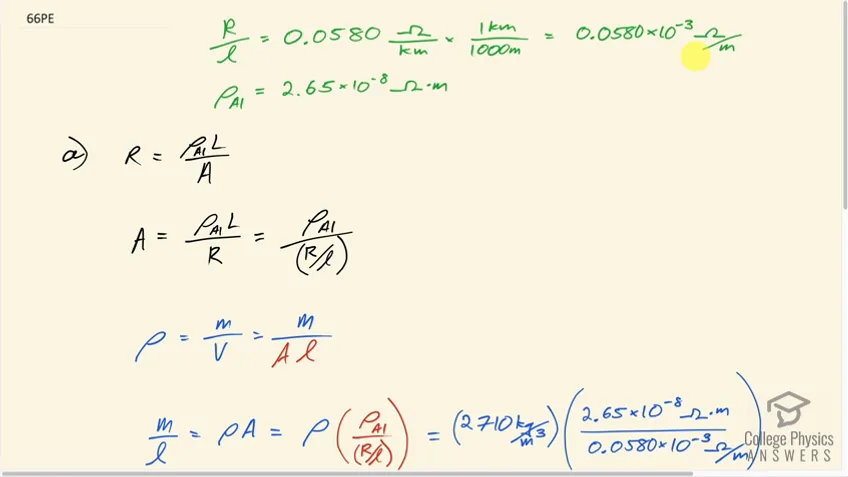 4:18PreviewProblem 66Full video with free trial(a) An aluminum power transmission line has a resistance of . What is its mass per kilometer? (b) What is the mass per kilometer of a copper line having the same resistance?
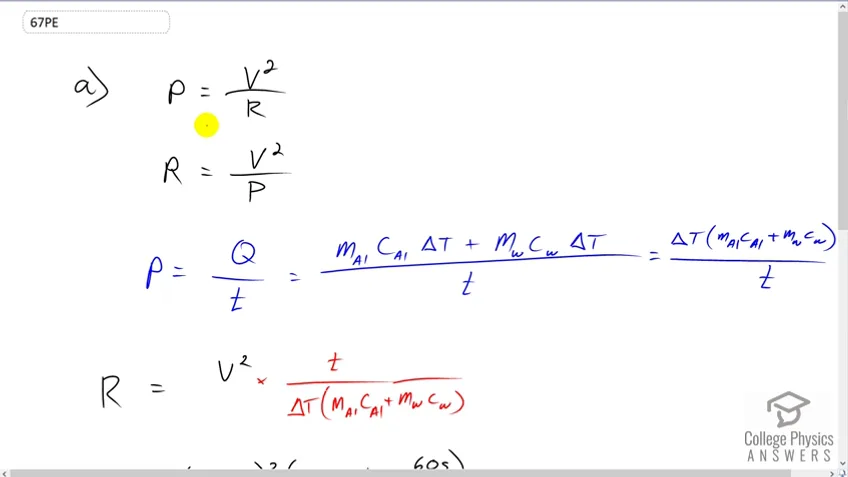 2:54PreviewProblem 67Full video with free trial(a) An immersion heater utilizing 120 V can raise the temperature of a aluminum cup containing 350 g of water from to in 2.00 min. Find its resistance, assuming it is constant during the process. (b) A lower resistance would shorten the heating time. Discuss the practical limits to speeding the heating by lowering the resistance.
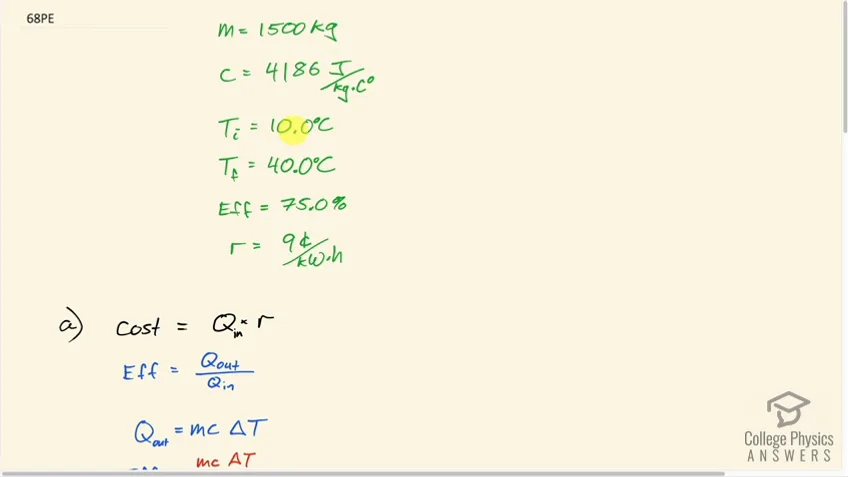 4:48PreviewProblem 68Full video with free trial(a) What is the cost of heating a hot tub containing 1500 kg of water from to , assuming 75.0% efficiency to account for heat transfer to the surroundings? The cost of electricity is 9 cents/kW ⋅ h . (b) What current was used by the 220-V AC electric heater, if this took 4.00 h?
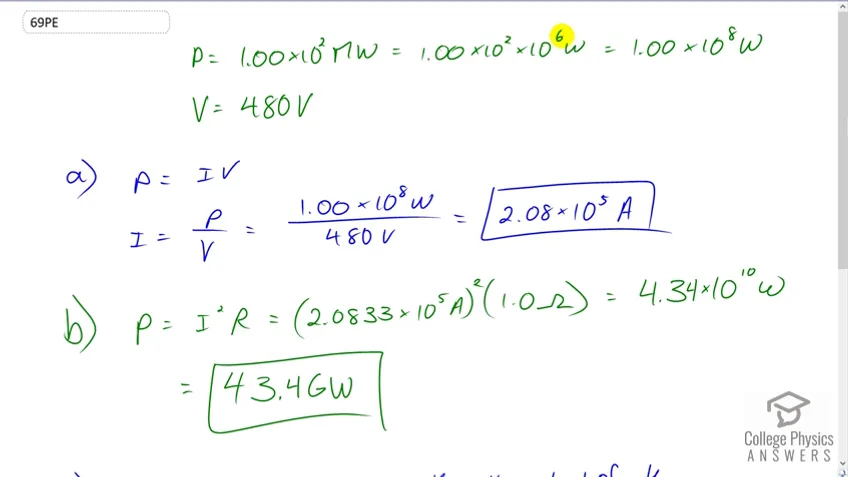 1:37PreviewProblem 69Full video with free trial(a) What current is needed to transmit of power at 480 V? (b) What power is dissipated by the transmission lines if they have a resistance? (c) What is unreasonable about this result? (d) Which assumptions are unreasonable, or which premises are inconsistent?
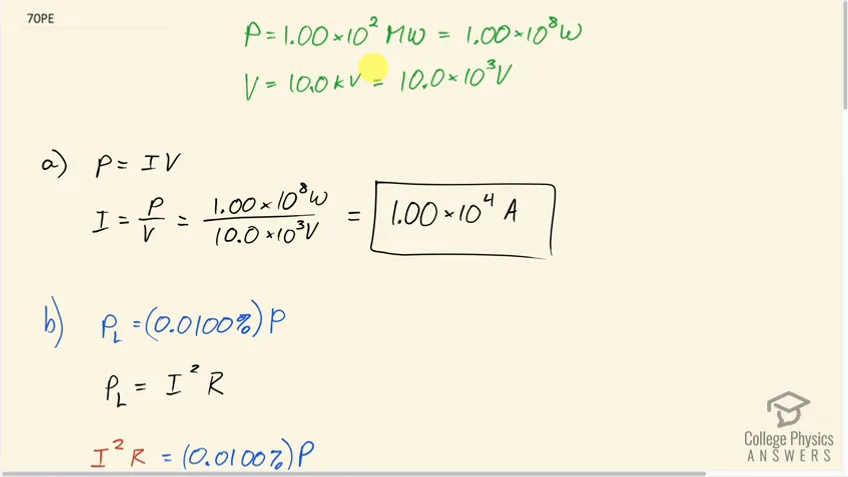 4:41PreviewProblem 70Full video with free trial(a) What current is needed to transmit of power at 10.0 kV? (b) Find the resistance of 1.00 km of wire that would cause a 0.0100% power loss. (c) What is the diameter of a 1.00-km-long copper wire having this resistance? (d) What is unreasonable about these results? (e) Which assumptions are unreasonable, or which premises are inconsistent?
20.5 Alternating Current versus Direct Current
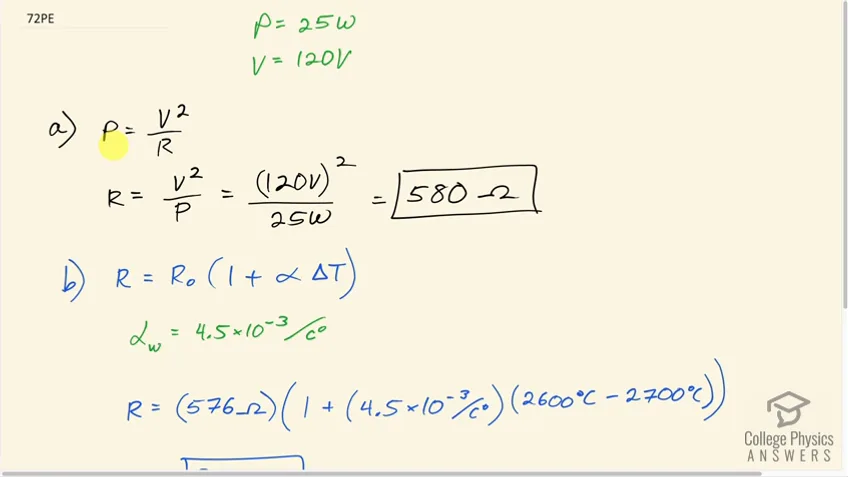 2:14PreviewProblem 72Full video with free trial(a) What is the hot resistance of a 25-W light bulb that runs on 120-V AC? (b) If the bulb’s operating temperature is , what is its resistance at ?
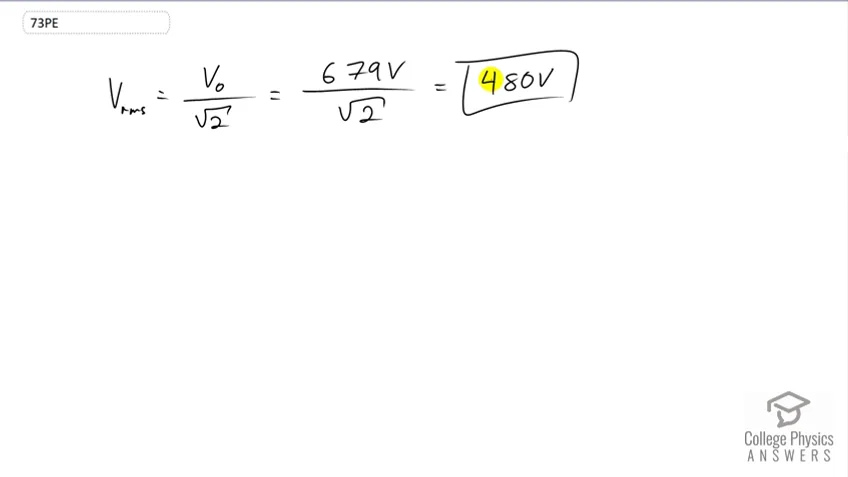 0:14PreviewProblem 73Full video with free trialCertain heavy industrial equipment uses AC power that has a peak voltage of 679 V. What is the rms voltage?
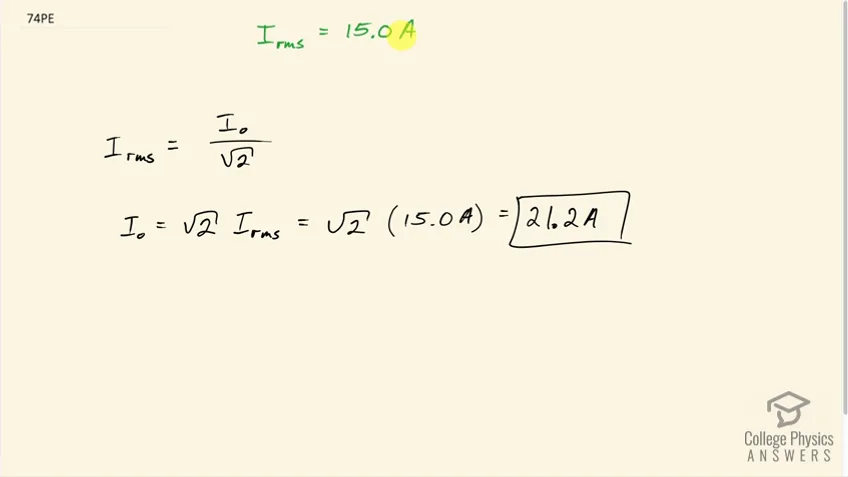 0:31PreviewProblem 74Full video with free trialA certain circuit breaker trips when the rms current is 15.0 A. What is the corresponding peak current?
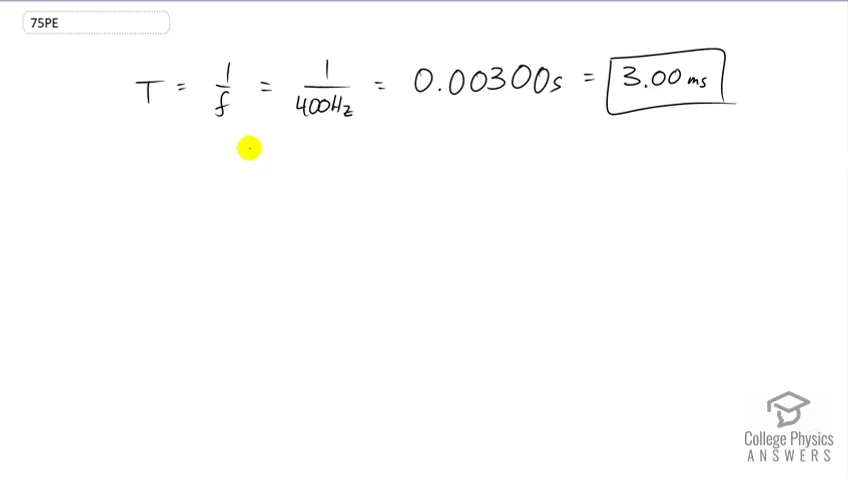 0:19PreviewProblem 75Full video with free trialMilitary aircraft use 400-Hz AC power, because it is possible to design lighter-weight equipment at this higher frequency. What is the time for one complete cycle of this power?
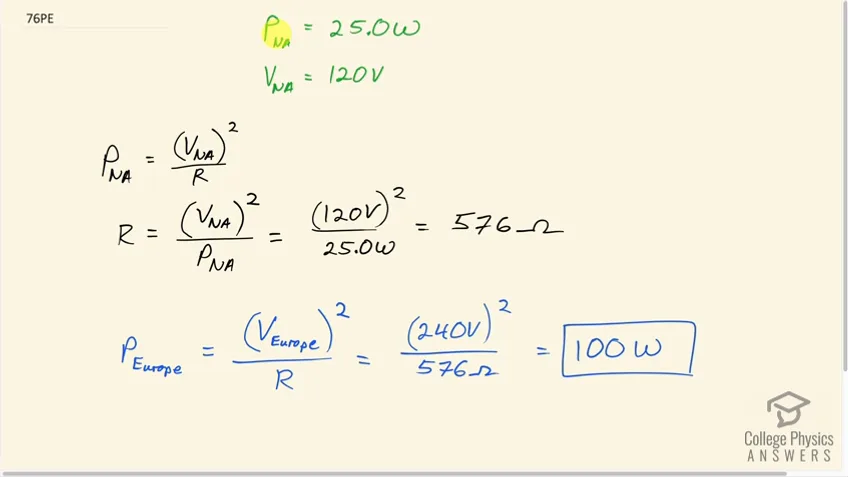 1:36PreviewProblem 76Full video with free trialA North American tourist takes his 25.0-W, 120-V AC razor to Europe, finds a special adapter, and plugs it into 240 V AC. Assuming constant resistance, what power does the razor consume as it is ruined?
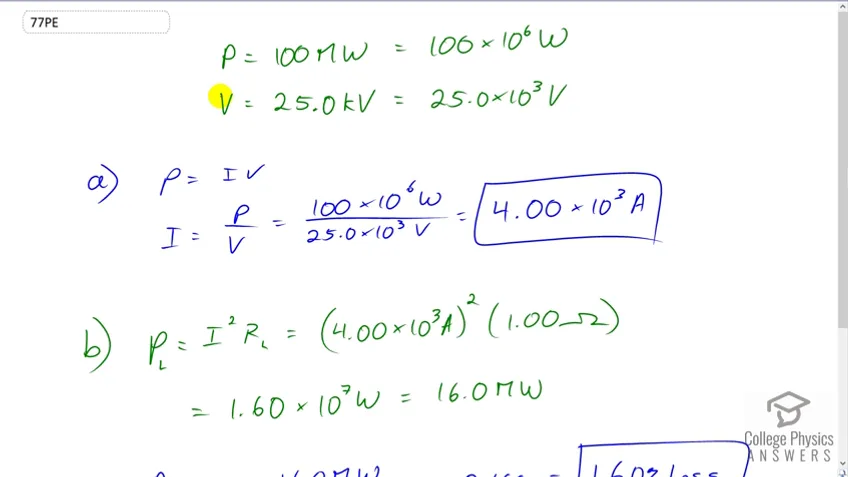 1:21PreviewProblem 77Full video with free trialIn this problem, you will verify statements made at the end of the power losses for Example 20.10. (a) What current is needed to transmit 100 MW of power at a voltage of 25.0 kV? (b) Find the power loss in a transmission line. (c) What percent loss does this represent?
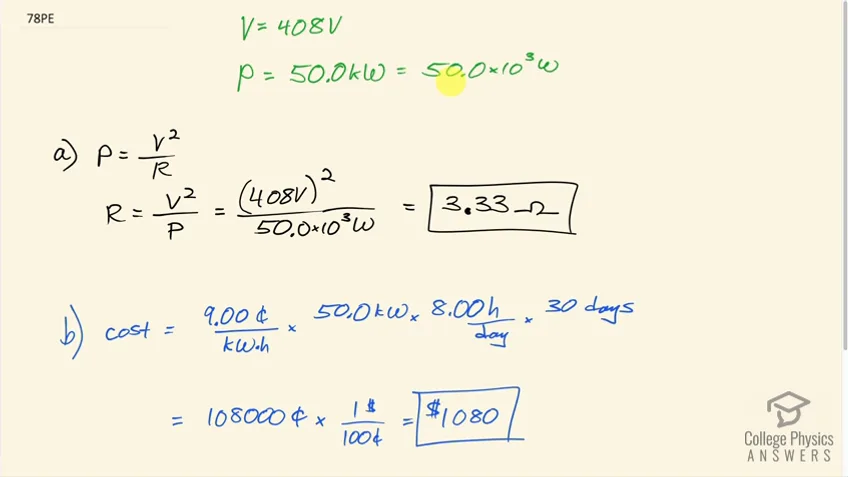 1:13PreviewProblem 78Full video with free trialA small office-building air conditioner operates on 408-V AC and consumes 50.0 kW. (a) What is its effective resistance? (b) What is the cost of running the air conditioner during a hot summer month when it is on 8.00 h per day for 30 days and electricity costs ?
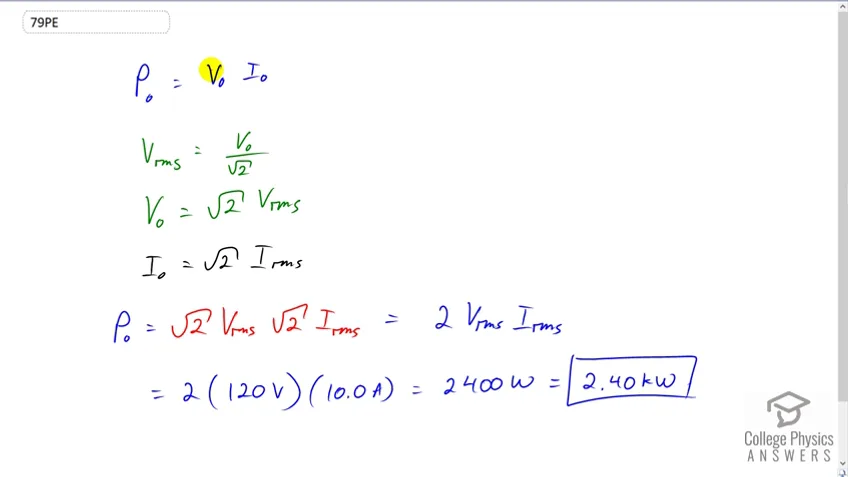 1:28PreviewProblem 79Full video with free trialWhat is the peak power consumption of a 120-V AC microwave oven that draws 10.0 A?
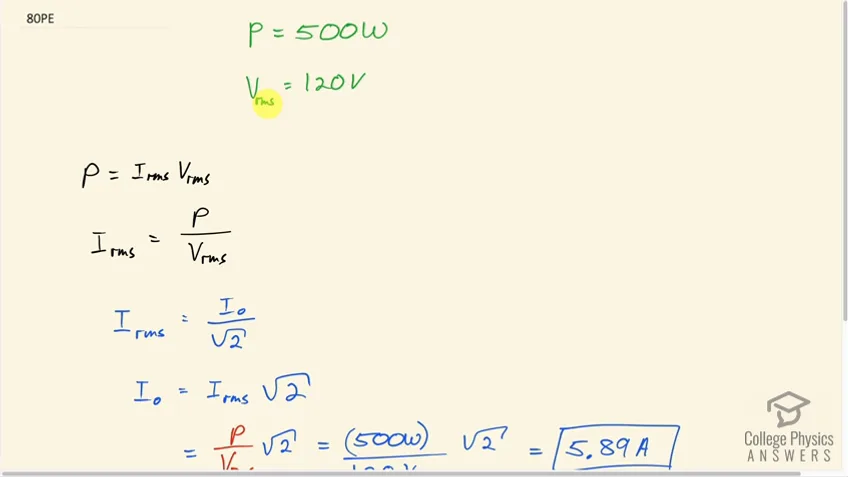 1:05PreviewProblem 80Full video with free trialWhat is the peak current through a 500-W room heater that operates on 120-V AC power?
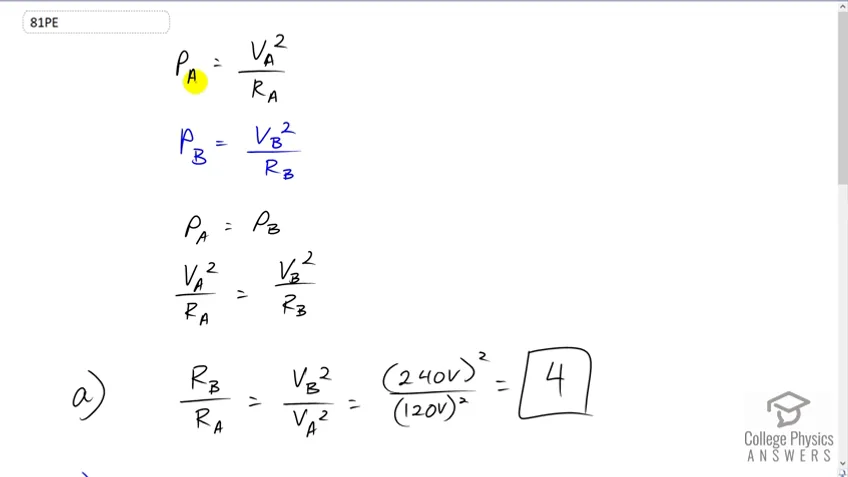 4:30PreviewProblem 81Full video with free trialTwo different electrical devices have the same power consumption, but one is meant to be operated on 120-V AC and the other on 240-V AC. (a) What is the ratio of their resistances? (b) What is the ratio of their currents? (c) Assuming its resistance is unaffected, by what factor will the power increase if a 120-V AC device is connected to 240-V AC?
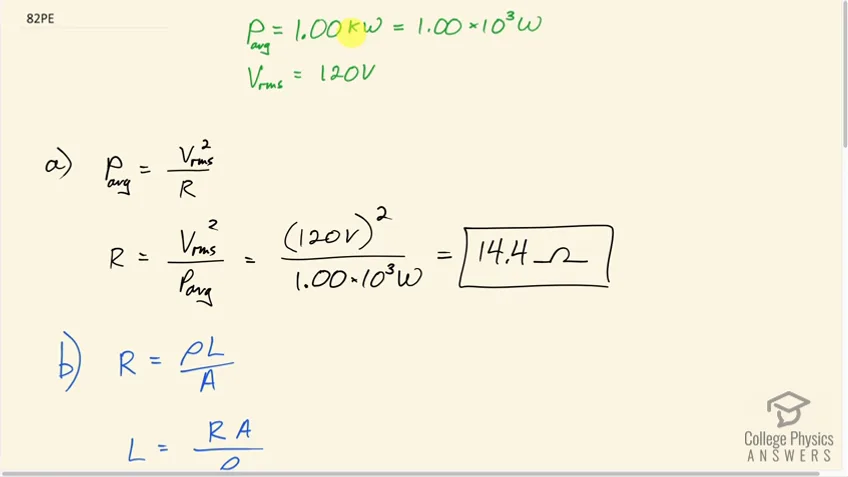 5:13PreviewProblem 82Full video with free trialNichrome wire is used in some radiative heaters. (a) Find the resistance needed if the average power output is to be 1.00 kW utilizing 120-V AC. (b) What length of Nichrome wire, having a cross-sectional area of , is needed if the operating temperature is ? (c) What power will it draw when first switched on?
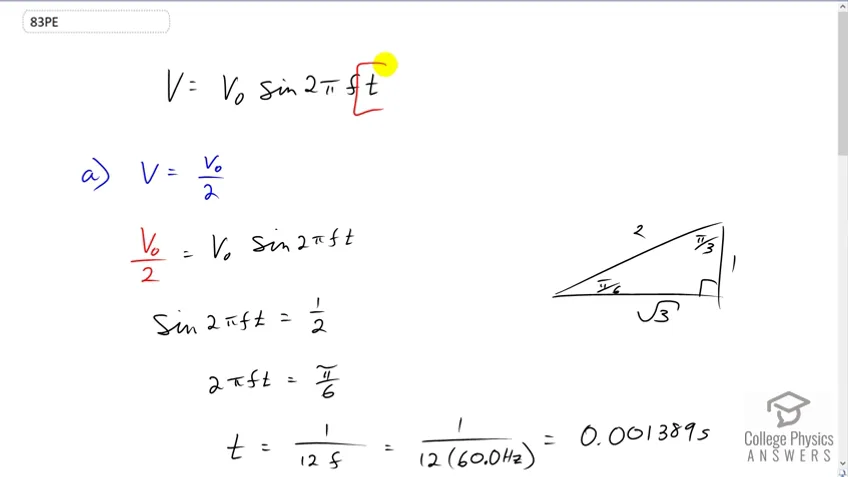 6:02PreviewProblem 83Full video with free trialFind the time after when the instantaneous voltage of 60-Hz AC first reaches the following values: (a) (b) (c) 0.
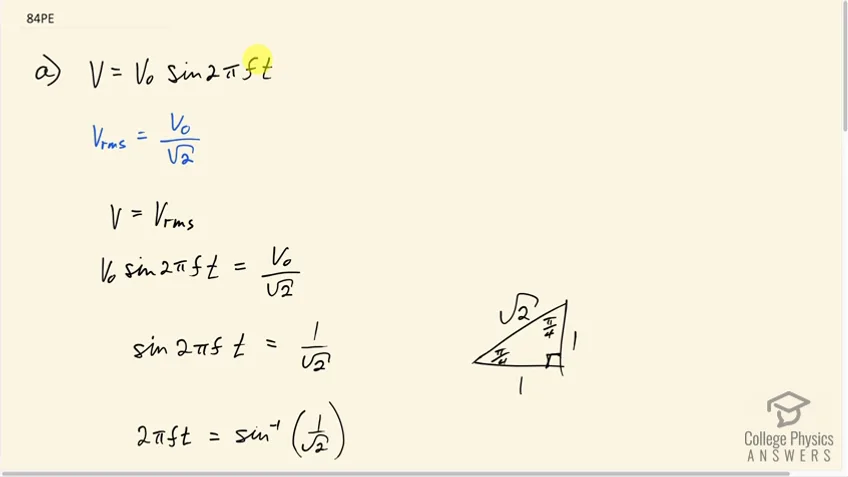 7:08PreviewProblem 84Full video with free trial(a) At what two times in the first period following does the instantaneous voltage in 60=Hz AC equal ? (b)
20.6 Electric Hazards and the Human Body
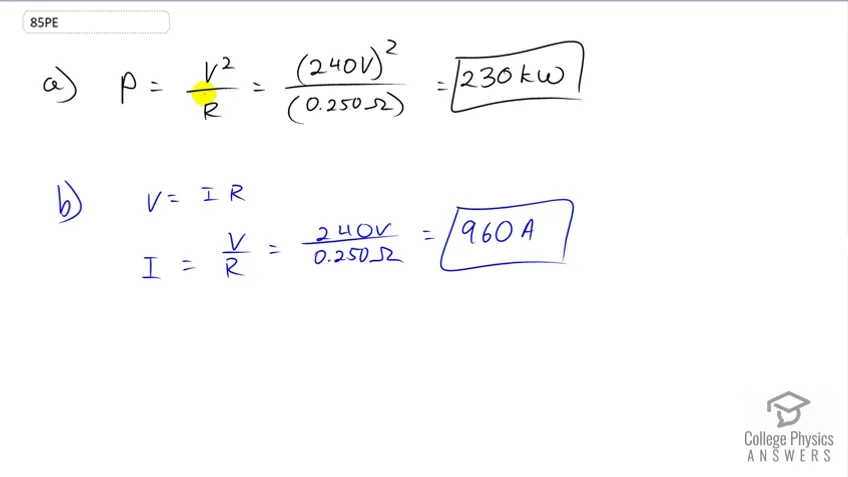 0:32PreviewProblem 85Full video with free trial(a) How much power is dissipated in a short circuit of 240-V AC through a resistance of ? (b) What current flows?
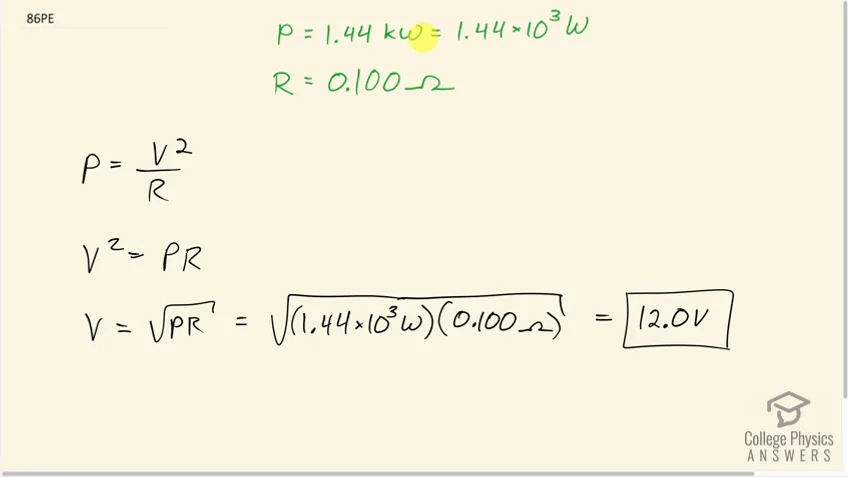 0:45PreviewProblem 86Full video with free trialWhat voltage is involved in a 1.44 kW short circuit through a resitance?
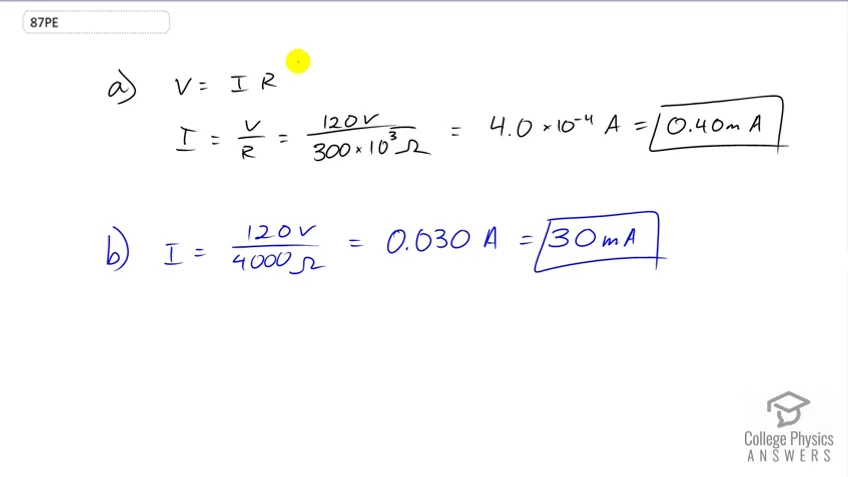 0:50PreviewProblem 87Full video with free trialFind the current through a person and identify the likely effect on her if she touches a 120-V AC source: (a) if she is standing on a rubber mat and offers a total resistance of ; (b) if she is standing barefoot on wet grass and has a resistance of only .
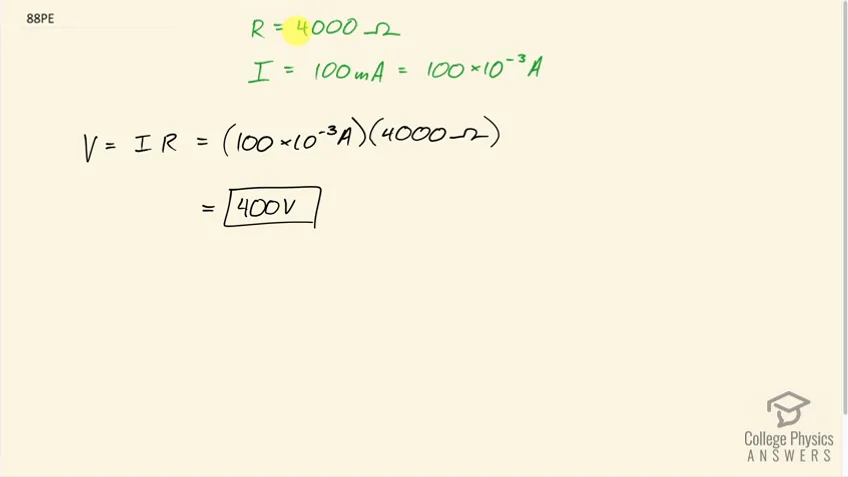 1:03PreviewProblem 88Full video with free trialWhile taking a bath, a person touches the metal case of a radio. The path through the person to the drainpipe and ground has a resistance of . What is the smallest voltage on the case of the radio that could cause ventricular fibrillation?
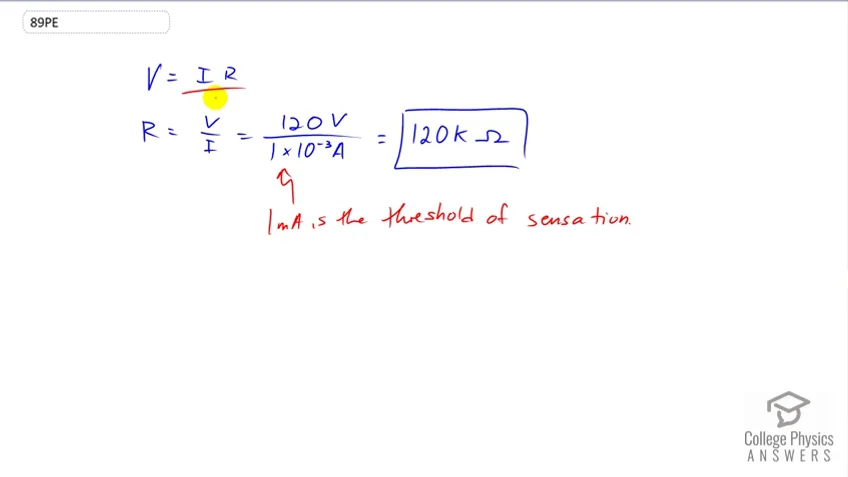 0:54PreviewProblem 89Full video with free trialFoolishly trying to fish a burning piece of bread from a toaster with a metal butter knife, a man comes into contact with 120-V AC. He does not even feel it since, luckily, he is wearing rubber-soled shoes. What is the minimum resistance of the path the current follows through the person?
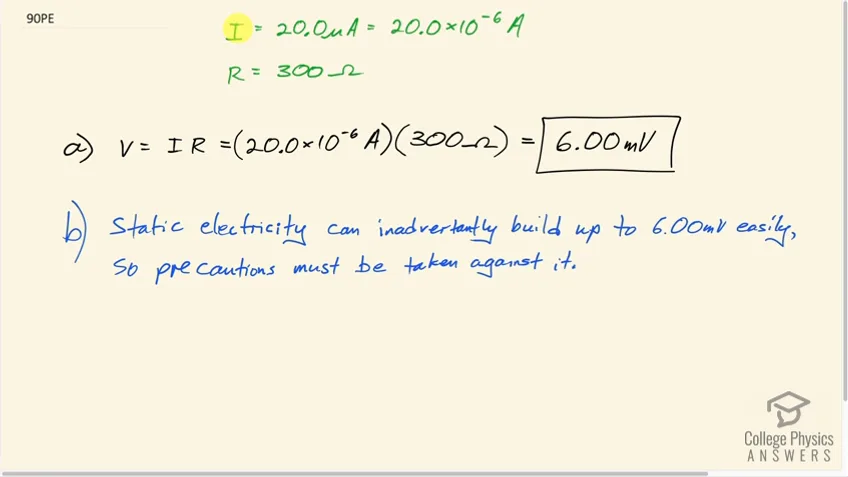 0:58PreviewProblem 90Full video with free trial(a) During surgery, a current as small as applied directly to the heart may cause ventricular fibrillation. If the resistance of the exposed heart is , what is the smallest voltage that poses this danger? (b) Does your answer imply that special electrical safety precautions are needed?
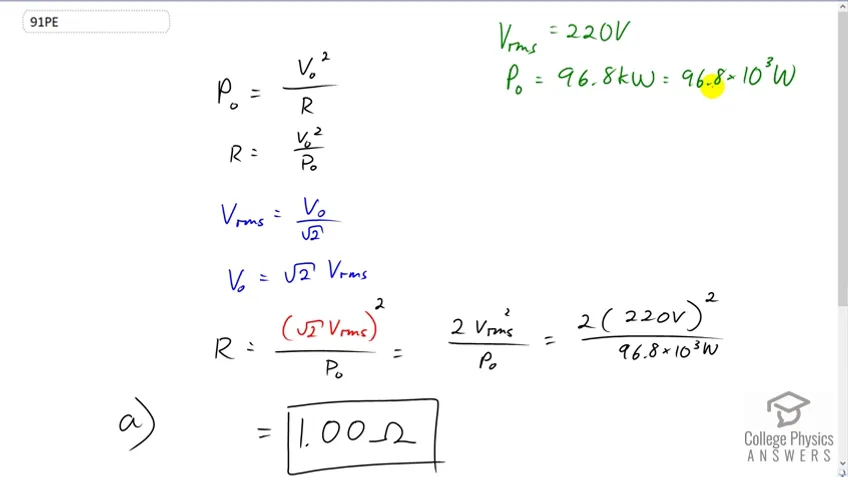 1:50PreviewProblem 91Full video with free trial(a) What is the resistance of a 220-V AC short circuit that generates a peak power of 96.8 kW? (b) What would the average power be if the voltage was 120 V AC?
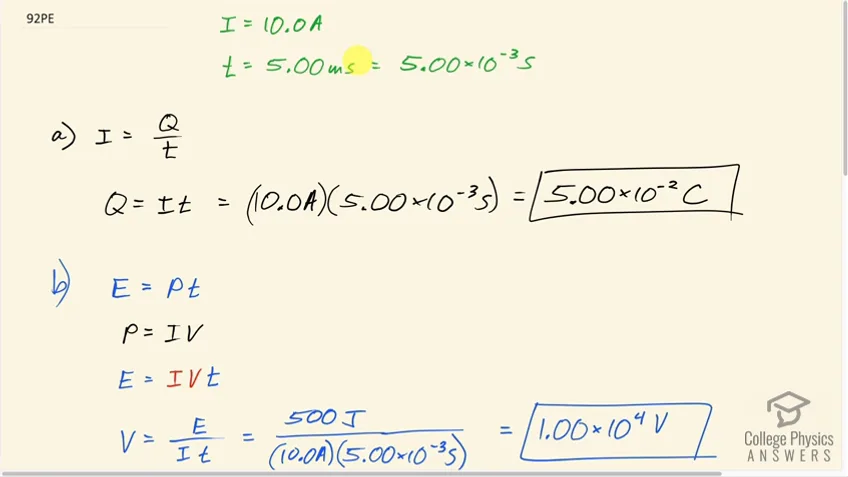 3:44PreviewProblem 92Full video with free trialA heart defibrillator passes 10.0 A through a patient’s torso for 5.00 ms in an attempt to restore normal beating. (a) How much charge passed? (b) What voltage was applied if 500 J of energy was dissipated? (c) What was the path’s resistance? (d) Find the temperature increase caused in the 8.00 kg of affected tissue.
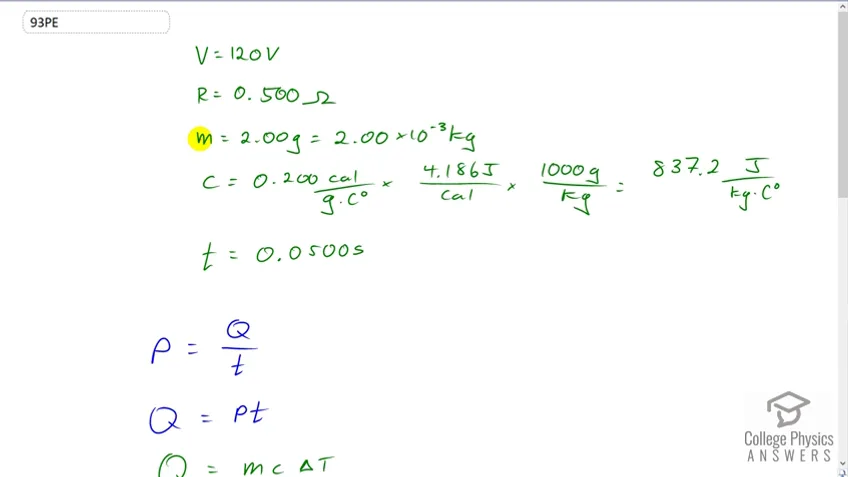 2:29PreviewProblem 93Full video with free trialA short circuit in a 120-V appliance cord has a resistance. Calculate the temperature rise of the 2.00 g of surrounding materials, assuming their specific heat capacity is and that it takes 0.0500 s for a circuit breaker to interrupt the current. Is this likely to be damaging?
20.7 Nerve Conduction—Electrocardiograms
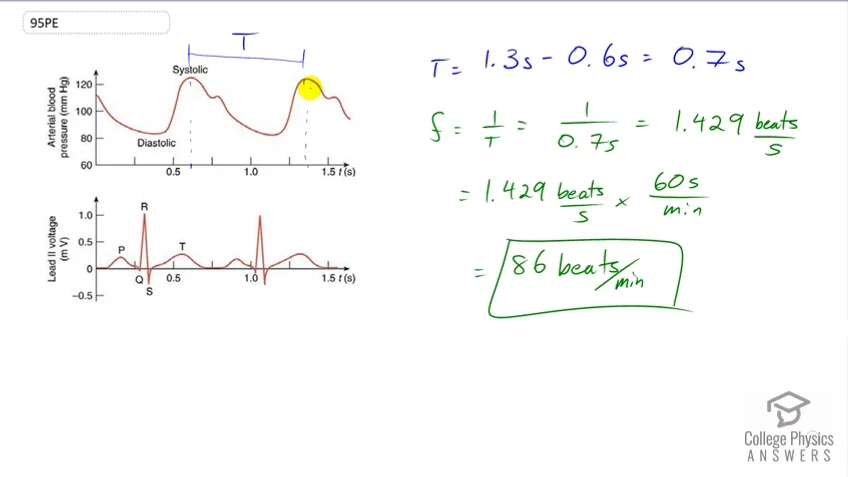 1:10PreviewProblem 95Full video with free trialUse the ECG in Figure 20.34 to determine the heart rate in beats per minute assuming a constant time between beats.
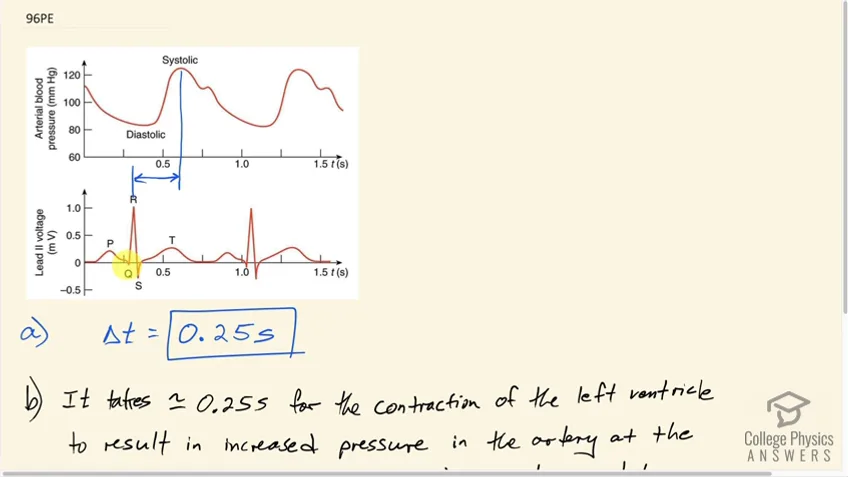 2:16PreviewProblem 96Full video with free trial(a) Referring to Figure 20.34, find the time systolic pressure lags behind the middle of the QRS complex. (b) Discuss the reasons for the time lag.