
sfd228·
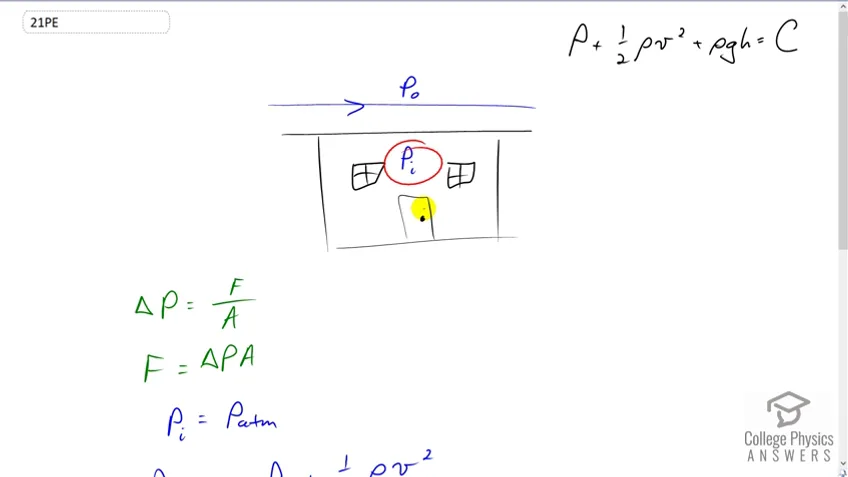
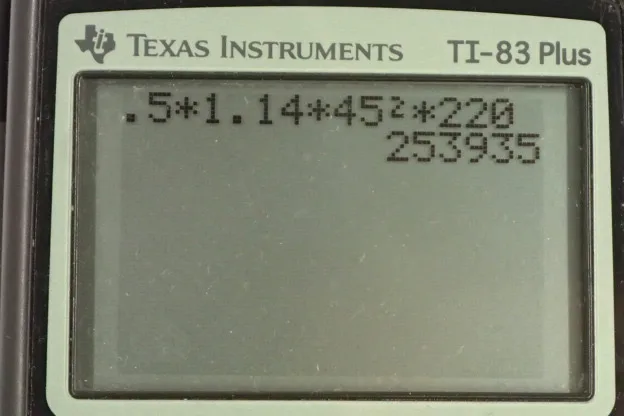
If you use the atmospheric pressure provided here to solve for P outside and then plug that into the P = F / A equation, you get a very different force a couple of magnitudes greater than the one you calculated. Just curious why you didn't use the Patm given in the stem?
Like
ShaunDychko·
Hi sfd228, thank you for the question. When plugging the atmospheric pressure in the house into P = F / A to find the force, the assumption being made is that there is a perfect vacuum outside the house, which of course is not the case. It's the pressure **difference** between inside the house vs. outside that results in a net force on the roof. The quickly moving air outside the house has a lower pressure as a result of its movement, so there's a net pressure pushing up on the roof since the pressure inside is still the original atmospheric pressure that exists with no air movement. Hope this helps, Shaun
Like