Problem14
Section 1.3: Accuracy, Precision, and Significant Figures

Question

An infant's pulse rate is measured to be . What is the percent uncertainty in this measurement?

Question by OpenStax is licensed under CC BY 4.0

Final Answer

44%

Solution video

1:15

This is a 13-second preview. Get access to the full video by starting your free 7-day trial.

5.0 (3)
204 views

Calculator Screenshots

Calculator screenshot

Video Transcript

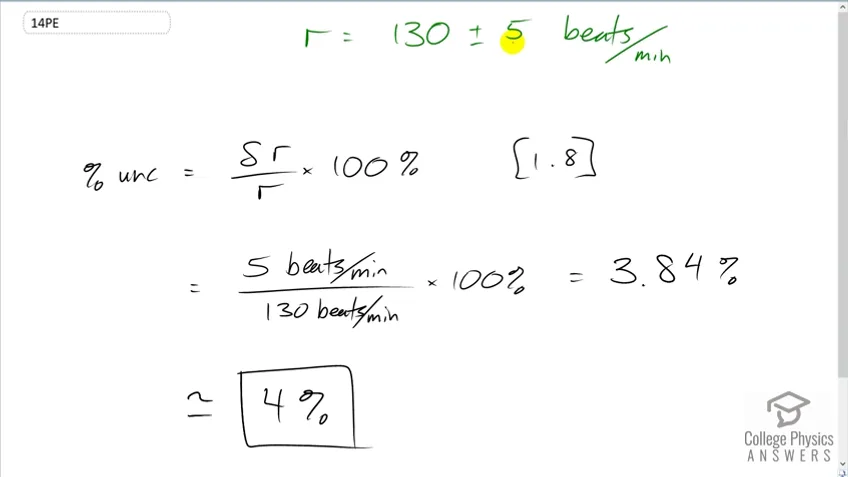
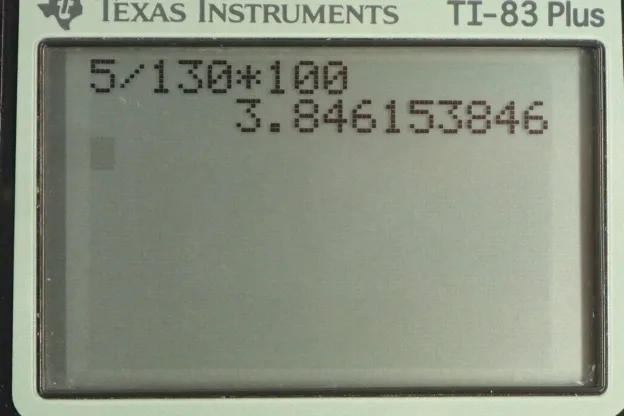
This is College Physics Answers with Shaun Dychko. An infant's heart rate is measured to be 130 beats per minute with an uncertainty of plus or minus 5 beats per minute and the question is what is the percent uncertainty in this measurement of a 130? So percent uncertainty from equation 8 in chapter 1 is the amount of error or the absolute error, in other words, which is 5 in this case divided by the measurement itself which is 130 and then we multiply by 100 percent. So we have 5 beats per minute uncertainty, δr divided by 130 beats per minute is the measurement and the units are the same— that's something you have to check all the time when doing these calculations, units on top and bottom have to be the same so that they cancel— and well, you are left with 3.84 percent is the percent uncertainty but because this is an uncertainty, it's an estimate of your uncertainty, you can never be very certain about it and so it's not appropriate to have three significant figures; either two or one is more appropriate and since we had only one significant figure in our absolute error, we'll take one significant figure in our percent uncertainty as well. So four percent is the percent uncertainty.

Comments

benjaminnomanim·
Would we use only 1 sig fig because the 5 is only one?
Like
ShaunDychko·
Thank you for the question. The absolute uncertainty, which is 5 in this case, means that the quantity (130 in other words) can be precise to the **one's** place. Counting significant figures (5 has only 1 sig fig) is relevant only when multiplying/dividing, so that isn't relevant in this question. To answer why the percent error, 4%, has only one significant figure: errors are only estimates, and as such they should always have only one significant figure, or maybe two, depending on the opinion of the person working in the lab. You'll never see an error with three or more significant figures. All the best, Shaun
Like