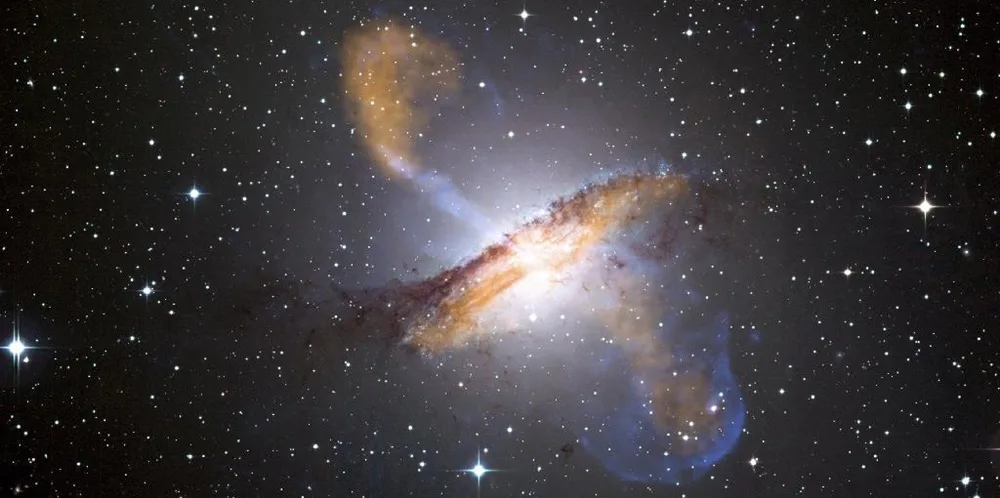
Chapter 34: Frontiers of Physics
29 problems solved · Free preview of every solution shows how it’s started · Watch the full videos with a free 7-day trial →


Section
34.1 Cosmology and Particle Physics
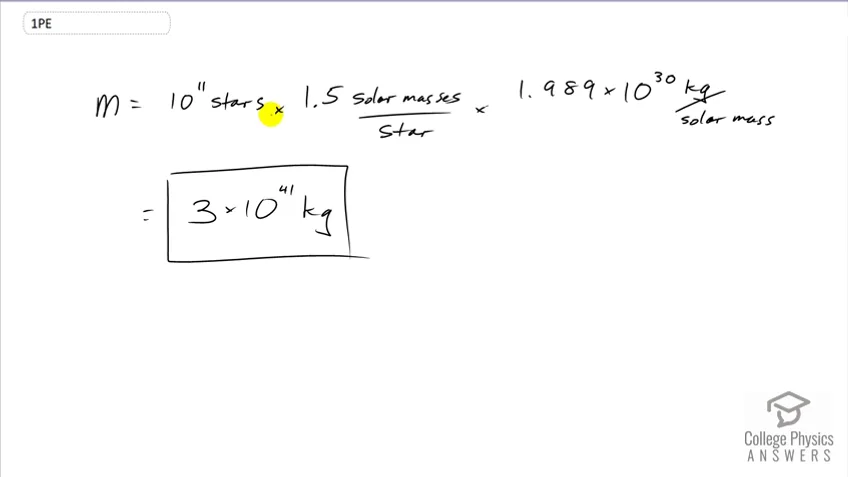 0:31Problem 1FreeFind the approximate mass of the luminous matter in the Milky Way galaxy, given it has approximately stars of average mass 1.5 times that of our Sun.
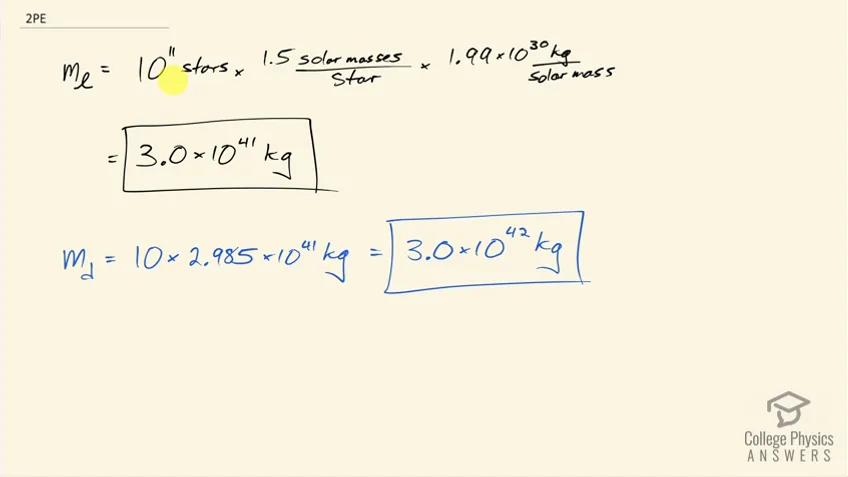 0:47PreviewProblem 2Full video with free trialFind the approximate mass of the dark and luminous matter in the Milky Way galaxy. Assume the luminous matter is due to approximately stars of average mass 1.5 times that of our Sun, and take the dark matter to be 10 times as massive as the luminous matter.
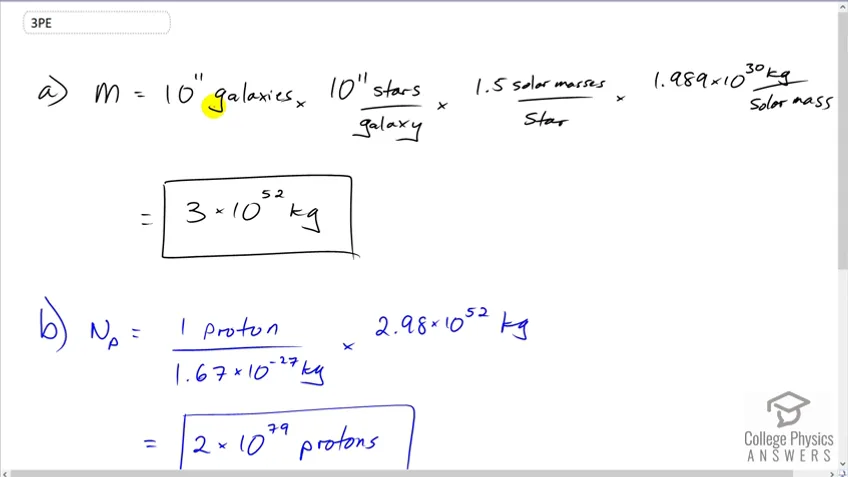 1:41PreviewProblem 3Full video with free trial(a) Estimate the mass of the luminous matter in the known universe, given there are galaxies, each containing stars of average mass 1.5 times that of our Sun. (b) How many protons (the most abundant nuclide) are there in this mass? (c) Estimate the total number of particles in the observable universe by multiplying the answer to (b) by two, since there is an electron for each proton, and then by , since there are far more particles (such as photons and neutrinos) in space than in luminous matter.
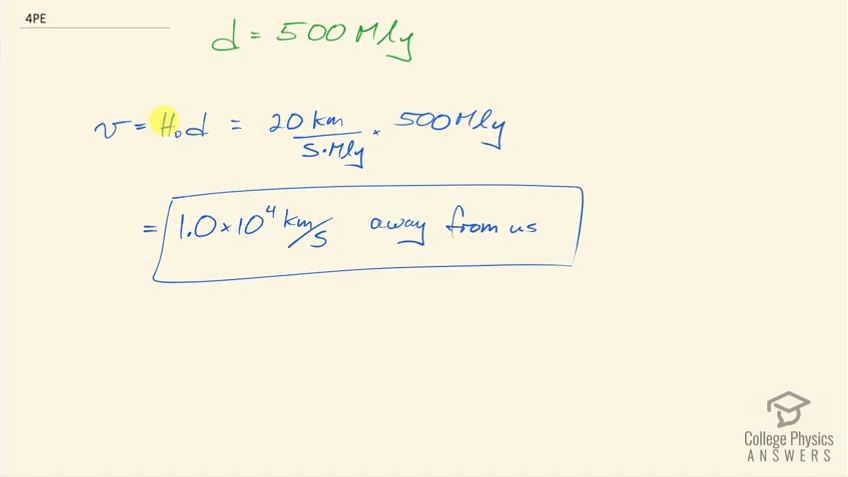 0:36PreviewProblem 4Full video with free trialIf a galaxy is 500 Mly away from us, how fast do we expect it to be moving and in what direction?
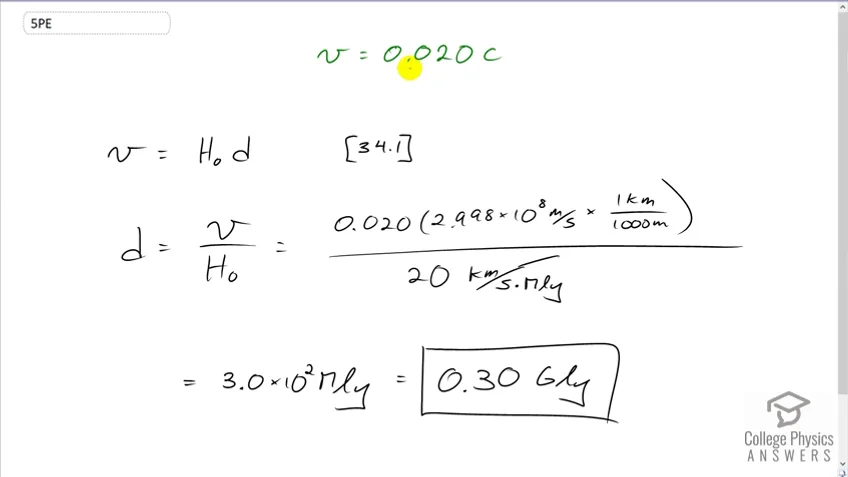 0:57PreviewProblem 5Full video with free trialOn average, how far away are galaxies that are moving away from us at 2.0% of the speed of light?
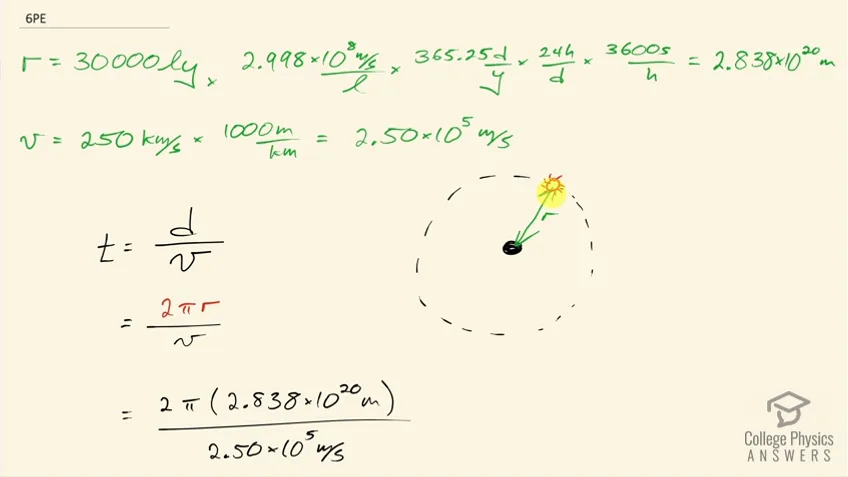 2:06PreviewProblem 6Full video with free trialOur solar system orbits the center of the Milky Way galaxy. Assuming a circular orbit 30,000 ly in radius and an orbital speed of 250 km/s, how many years does it take for one revolution? Note that this is approximate, assuming constant speed and circular orbit, but it is representative of the time for our system and local stars to make one revolution around the galaxy.
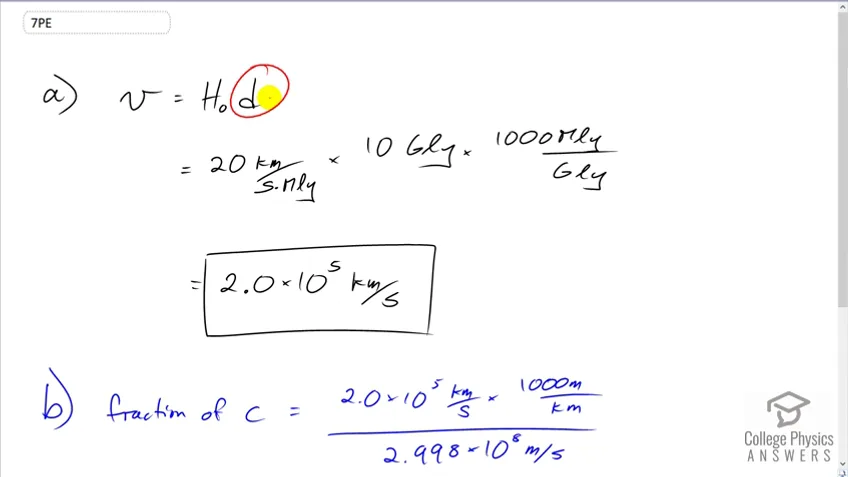 0:59PreviewProblem 7Full video with free trial(a) What is the approximate speed relative to us of a galaxy near the edge of the known universe, some 10 Gly away? (b) What fraction of the speed of light is this? Note that we have observed galaxies moving away from us at greater than .
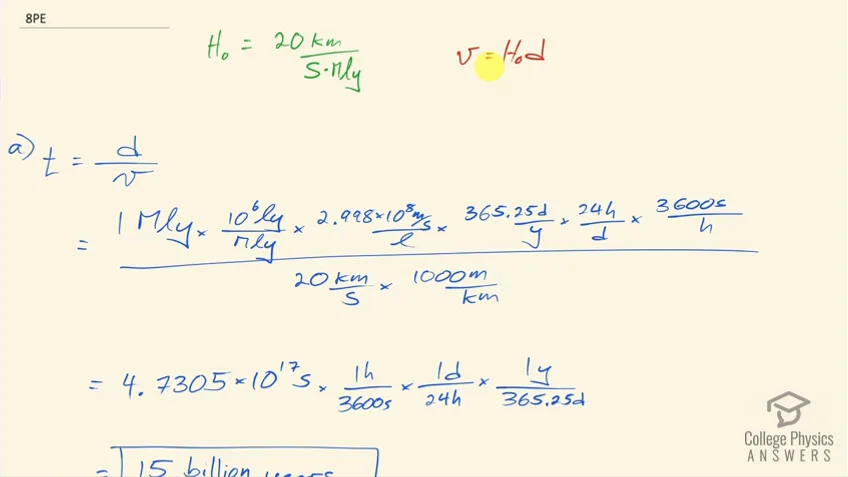 2:57PreviewProblem 8Full video with free trial(a) Calculate the approximate age of the universe from the average value of the Hubble constant, . To do this, calculate the time it would take to travel 1 Mly at a constant expansion rate of 20 km/s. (b) If deceleration is taken into account, would the actual age of the universe be greater or less than that found here? Explain.
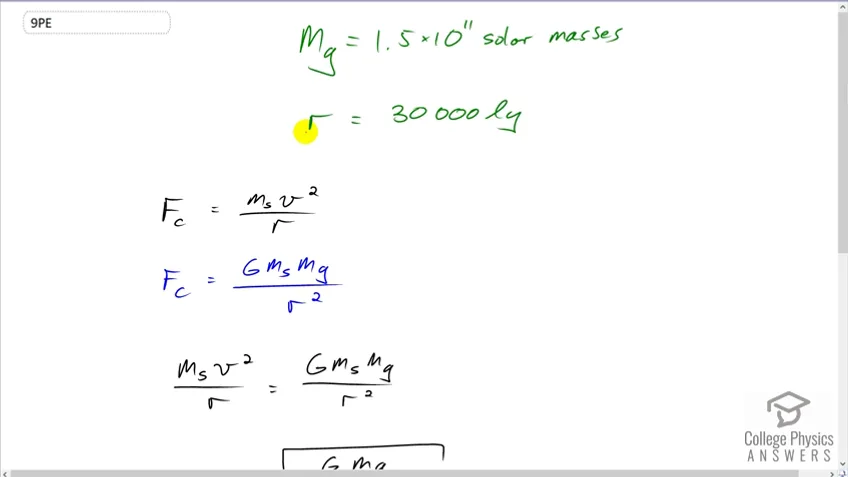 1:53PreviewProblem 9Full video with free trialAssuming a circular orbit for the Sun about the center of the Milky Way galaxy, calculate its orbital speed using the following information: The mass of the galaxy is equivalent to a single mass times that of the Sun (or ), located 30,000 ly away.
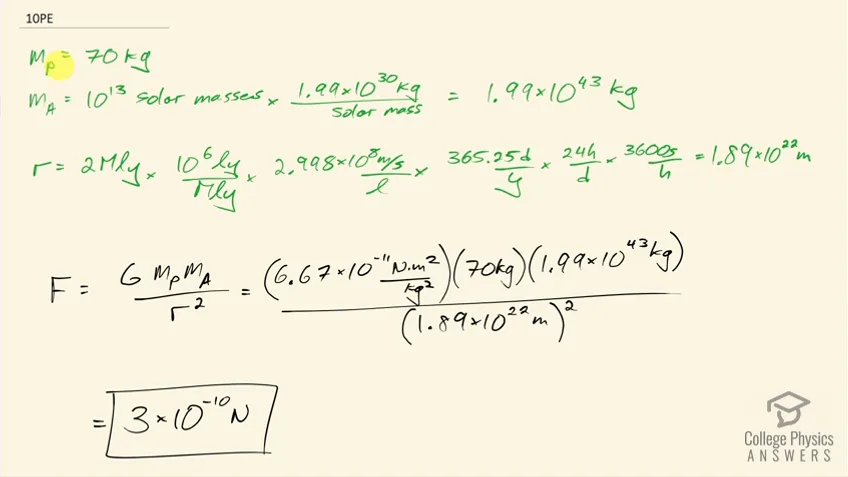 2:13PreviewProblem 10Full video with free trial(a) What is the approximate force of gravity on a 70-kg person due to the Andromeda galaxy, assuming its total mass is that of our Sun and acts like a single mass 2 Mly away? (b) What is the ratio of this force to the person's weight? Note that Andromeda is the closest large galaxy.
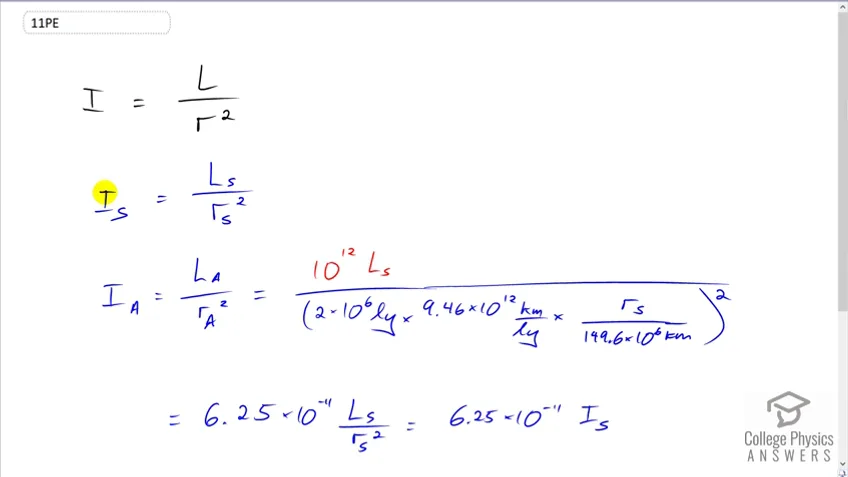 1:33PreviewProblem 11Full video with free trialAndromeda galaxy is the closest large galaxy and is visible to the naked eye. Estimate its brightness relative to the Sun, assuming it has luminosity times that of the Sun and lies 2 Mly away.
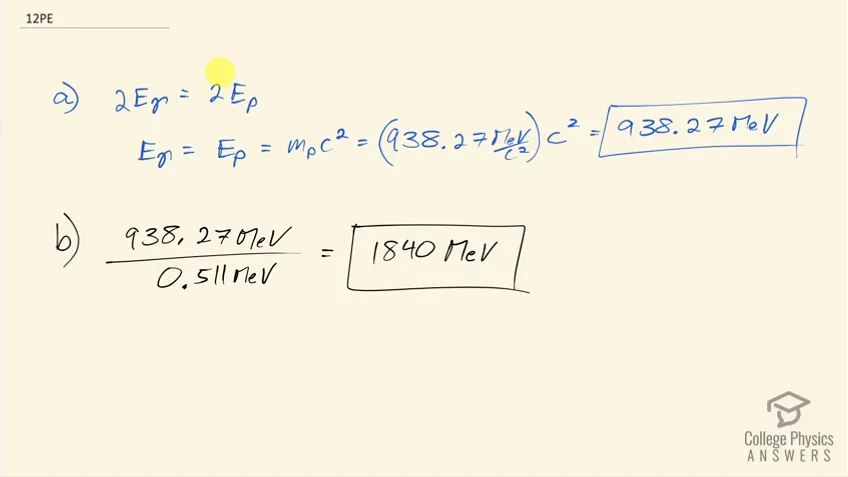 1:30PreviewProblem 12Full video with free trial(a) A particle and its antiparticle are at rest relative to an observer and annihilate (completely destroying both masses), creating two γ rays of equal energy. What is the characteristic γ -ray energy you would look for if searching for evidence of proton-antiproton annihilation? (The fact that such radiation is rarely observed is evidence that there is very little antimatter in the universe.) (b) How does this compare with the 0.511-MeV energy associated with electron-positron annihilation?
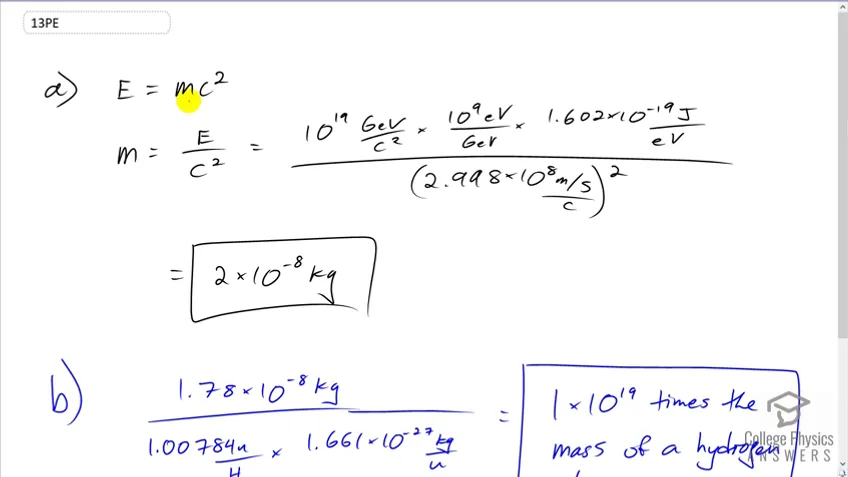 1:32PreviewProblem 13Full video with free trialThe average particle energy needed to observe unification of forces is estimated to be . (a) What is the rest mass in kilograms of a particle that has a rest mass of ? (b) How many times the mass of a hydrogen atom is this?
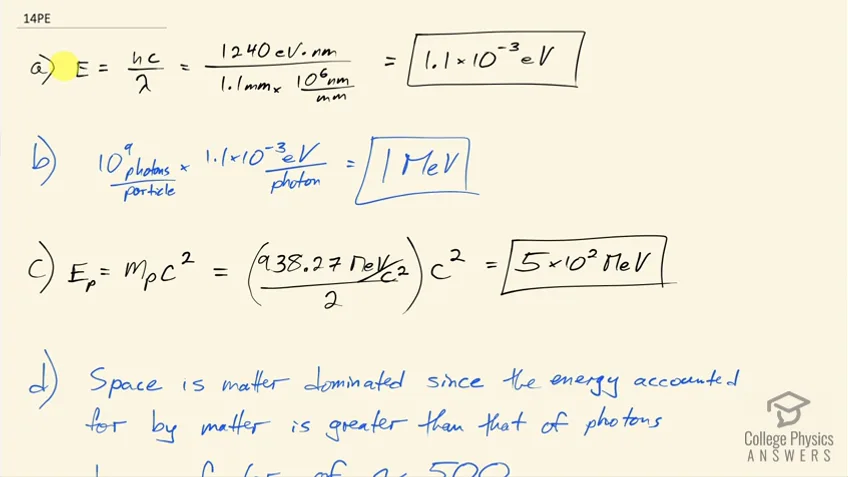 1:45PreviewProblem 14Full video with free trialThe peak intensity of the CMBR occurs at a wavelength of 1.1 mm. (a) What is the energy in eV of a 1.1-mm photon? (b) There are approximately photons for each massive particle in deep space. Calculate the energy of such photons. (c) If the average massive particle in space has a mass half that of a proton, what energy would be created by converting its mass to energy? (d) Does this imply that space is “matter dominated”? Explain briefly.
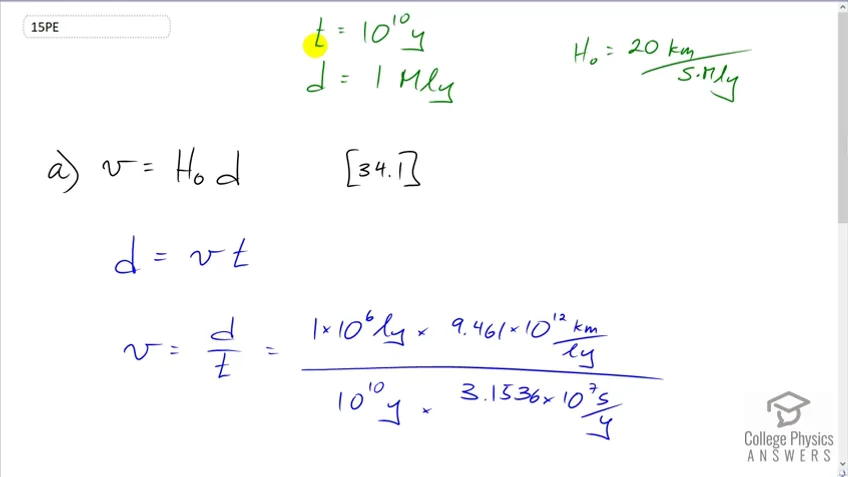 3:29PreviewProblem 15Full video with free trial(a) What Hubble constant corresponds to an approximate age of the universe of ? To get an approximate value, assume the expansion rate is constant and calculate the speed at which two galaxies must move apart to be separated by 1 Mly (present average galactic separation) in a time of (b) Similarly, what Hubble constant corresponds to a universe approximately old?
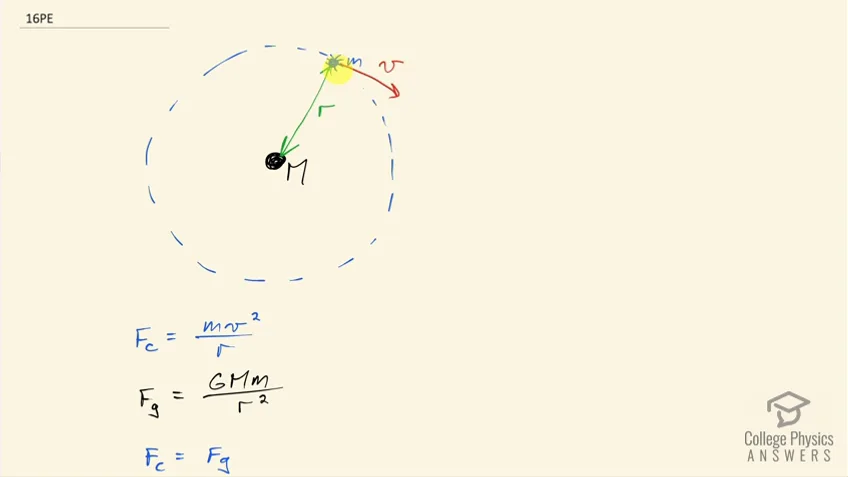 2:00PreviewProblem 16Full video with free trialShow that the velocity of a star orbiting its galaxy in a circular orbit is inversely proportional to the square root of its orbital radius, assuming the mass of the stars inside its orbit acts like a single mass at the center of the galaxy. You may use an equation from a previous chapter to support your conclusion, but you must justify its use and define all terms used.
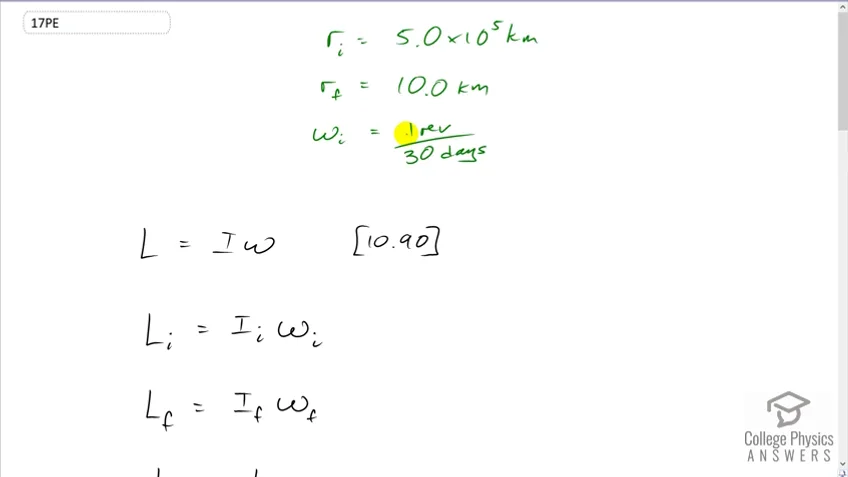 2:43PreviewProblem 17Full video with free trialThe core of a star collapses during a supernova, forming a neutron star. Angular momentum of the core is conserved, and so the neutron star spins rapidly. If the initial core radius is and it collapses to 10.0 km, find the neutron star's angular velocity in revolutions per second, given the core's angular velocity was originally 1 revolution per 30.0 days.
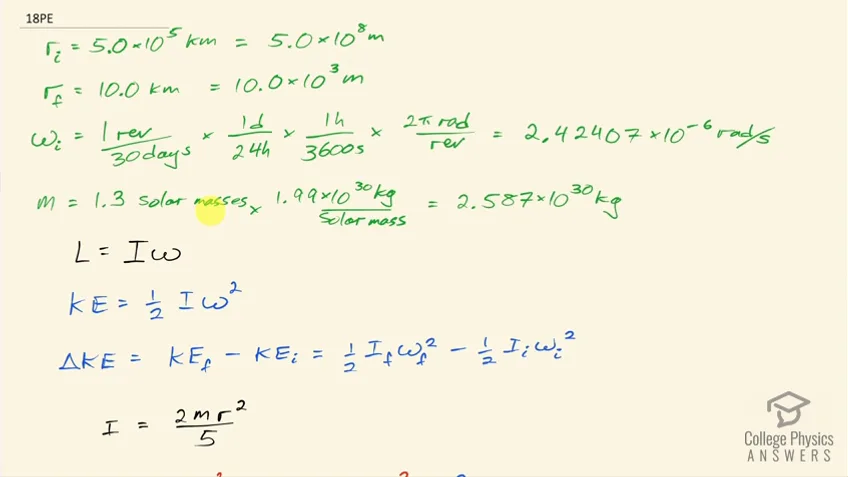 5:17PreviewProblem 18Full video with free trialUsing data from the previous problem, find the increase in rotational kinetic energy, given the core's mass is 1.3 times that of our Sun. Where does this increase in kinetic energy come from?
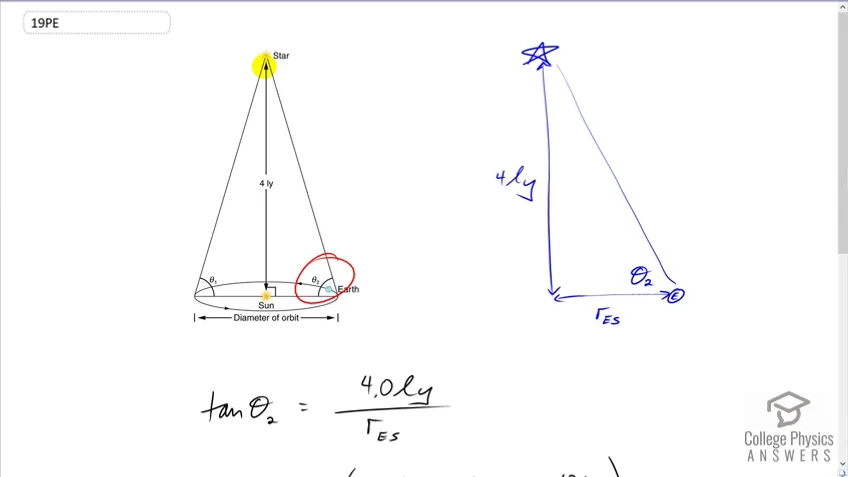 0:49PreviewProblem 19Full video with free trialDistances to the nearest stars (up to 500 ly away) can be measured by a technique called parallax, as shown in Figure 34.26. What are the angles and relative to the plane of the Earth's orbit for a star 4.0 ly directly above the Sun?
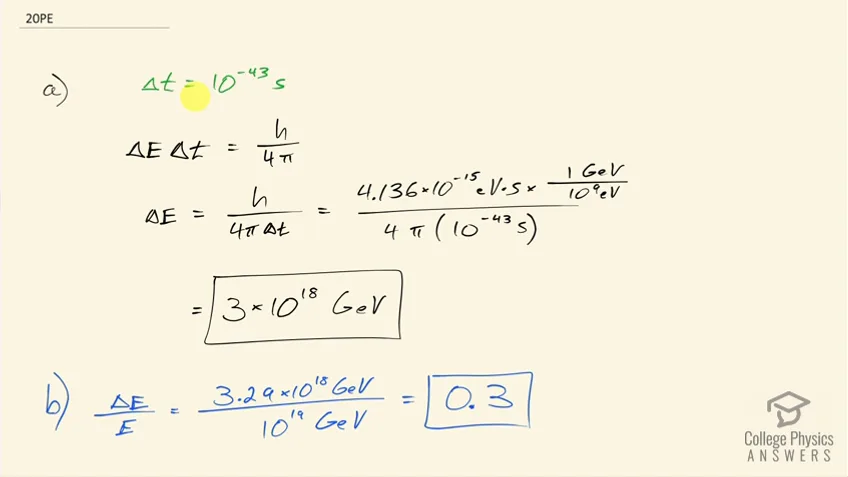 1:43PreviewProblem 20Full video with free trial(a) Use the Heisenberg uncertainty principle to calculate the uncertainty in energy for a corresponding time interval of . (b) Compare this energy with the unification-of-forces energy and discuss why they are similar.
34.2 General Relativity and Quantum Gravity
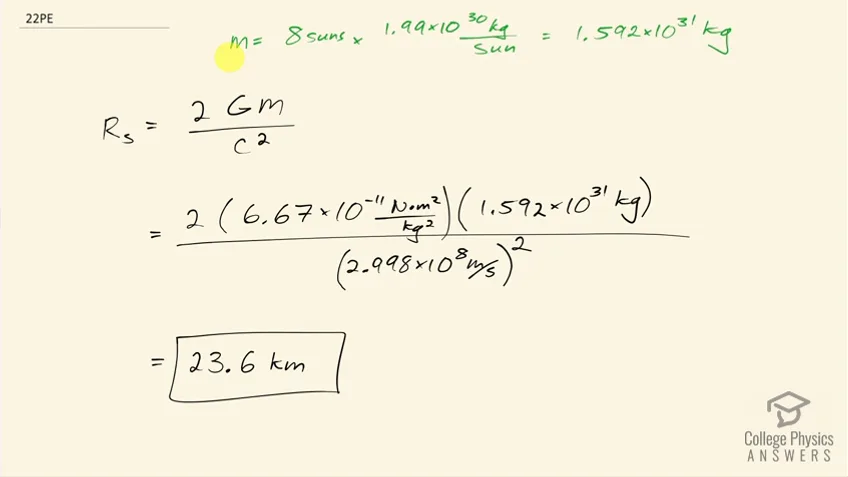 0:38PreviewProblem 22Full video with free trialWhat is the Schwarzschild radius of a black hole that has a mass eight times that of our Sun? Note that stars must be more massive than the Sun to form black holes as a result of a supernova.
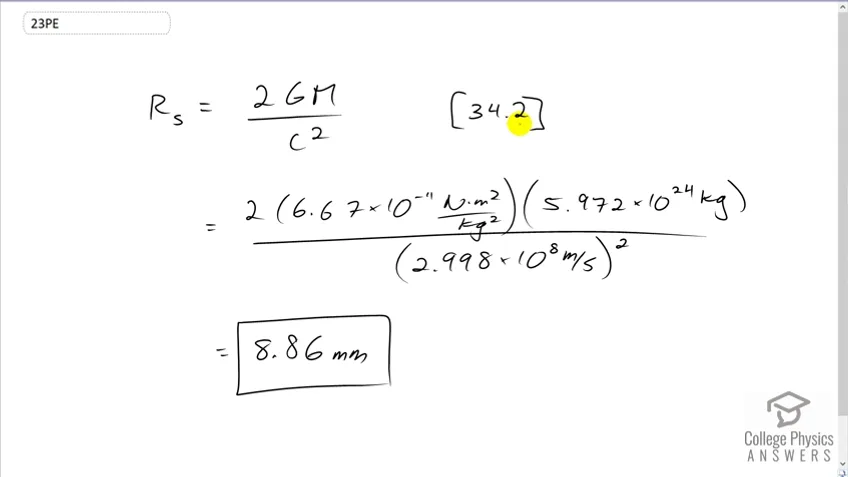 0:36PreviewProblem 23Full video with free trialBlack holes with masses smaller than those formed in supernovas may have been created in the Big Bang. Calculate the radius of one that has a mass equal to the Earth's.
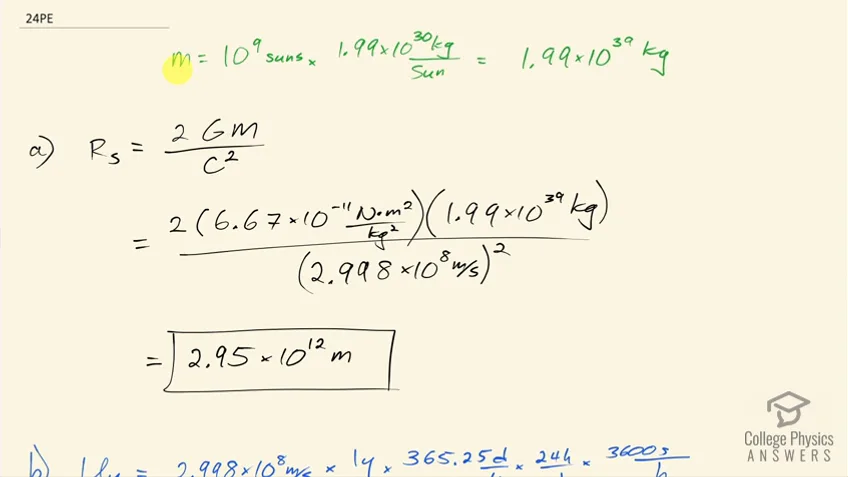 1:27PreviewProblem 24Full video with free trialSupermassive black holes are thought to exist at the center of many galaxies. (a) What is the radius of such an object if it has a mass of Suns? (b) What is this radius in light years?
34.3 Superstrings
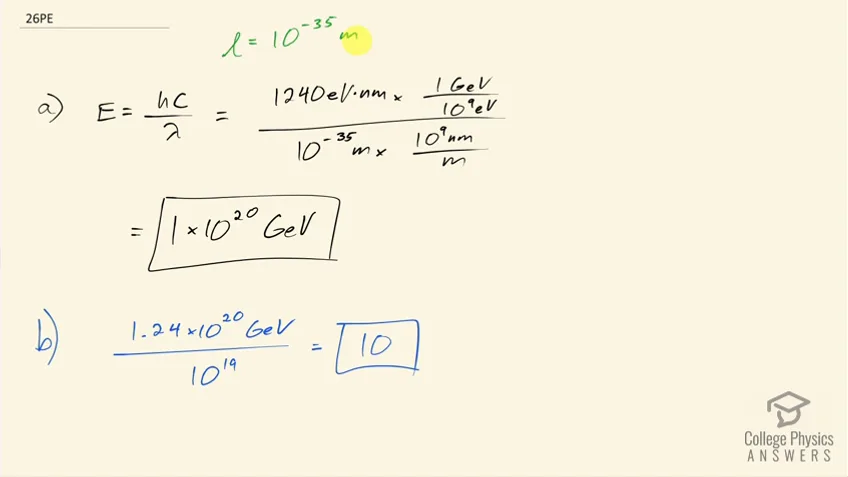 1:00PreviewProblem 26Full video with free trialThe characteristic length of entities in Superstring theory is approximately . (a) Find the energy in GeV of a photon of this wavelength. (b) Compare this with the average particle energy of needed for unification of forces.
34.4 Dark Matter and Closure
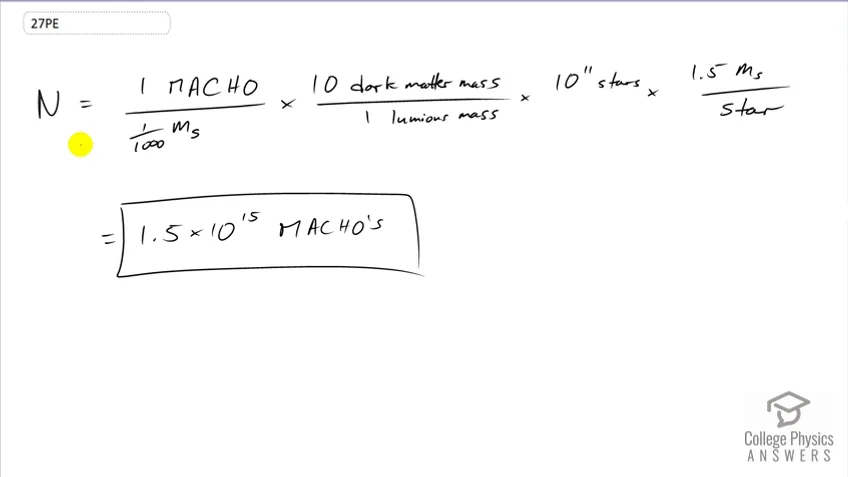 0:58PreviewProblem 27Full video with free trialIf the dark matter in the Milky Way were composed entirely of MACHOs (evidence shows it is not), approximately how many would there have to be? Assume the average mass of a MACHO is 1/1000 that of the Sun, and that dark matter has a mass 10 times that of the luminous Milky Way galaxy with its stars of average mass 1.5 times the Sun’s mass.
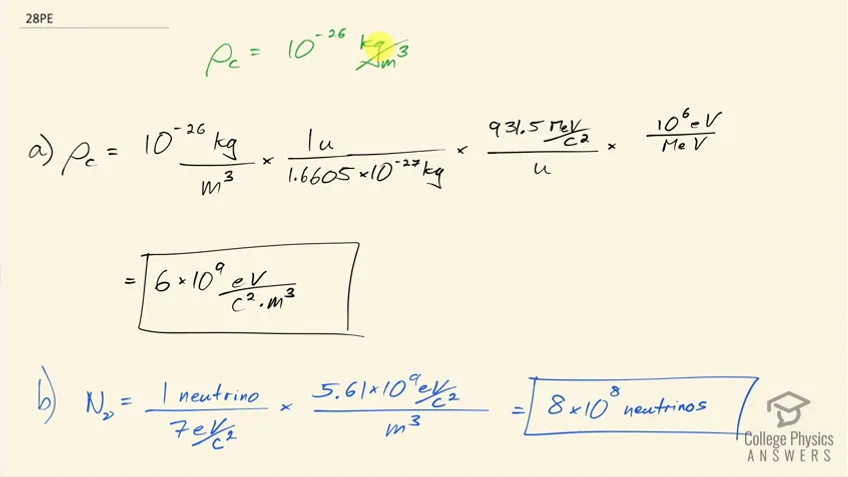 1:24PreviewProblem 28Full video with free trialThe critical mass density needed to just halt the expansion of the universe is approximately . (a) Convert this to . (b) Find the number of neutrinos per cubic meter needed to close the universe if their average mass is and they have negligible kinetic energies.
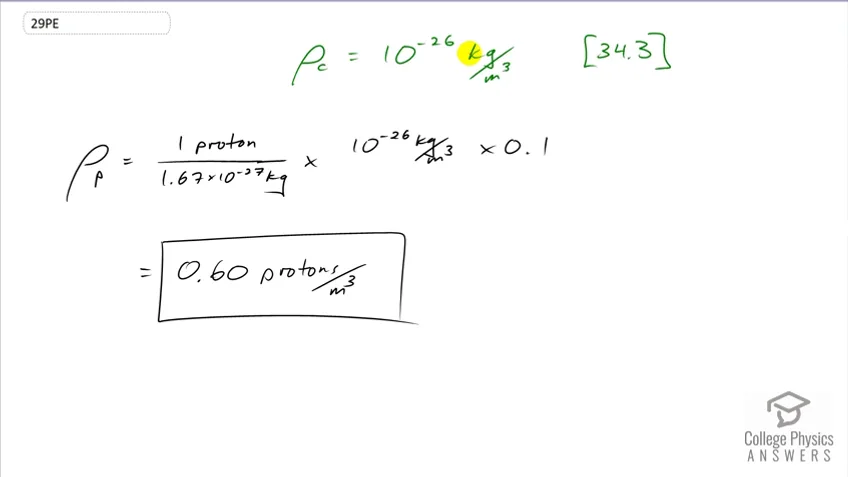 0:50PreviewProblem 29Full video with free trialAssume the average density of the universe is 0.1 of the critical density needed for closure. What is the average number of protons per cubic meter, assuming the universe is composed mostly of hydrogen?
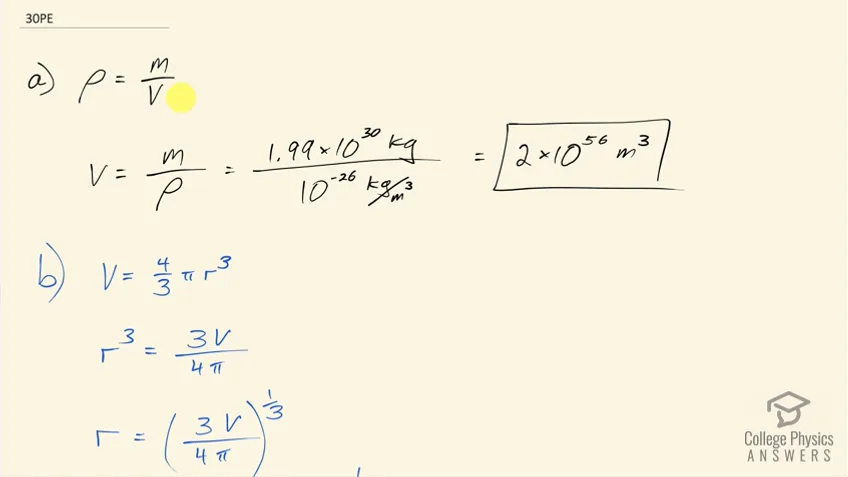 4:14PreviewProblem 30Full video with free trialTo get an idea of how empty deep space is on the average, perform the following calculations: (a) Find the volume our Sun would occupy if it had an average density equal to the critical density of thought necessary to halt the expansion of the universe. (b) Find the radius of a sphere of this volume in light years. (c) What would this radius be if the density were that of luminous matter, which is approximately 5% that of the critical density? (d) Compare the radius found in part (c) with the 4-ly average separation of stars in the arms of the Milky Way.
34.6 High-temperature Superconductors
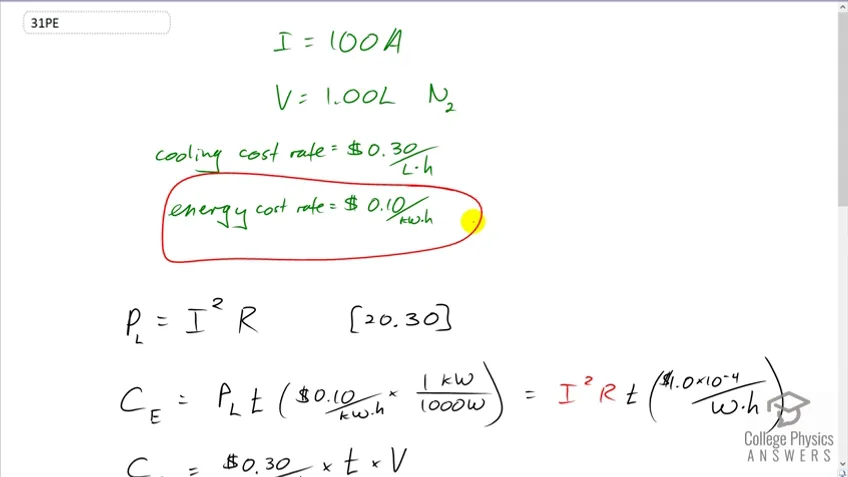 2:13PreviewProblem 31Full video with free trialA section of superconducting wire carries a current of 100 A and requires 1.00 L of liquid nitrogen per hour to keep it below its critical temperature. For it to be economically advantageous to use a superconducting wire, the cost of cooling the wire must be less than the cost of energy lost to heat in the wire. Assume that the cost of liquid nitrogen is 0.10 per kW·h. What is the resistance of a normal wire that costs as much in wasted electric energy as the cost of liquid nitrogen for the superconductor?