Question
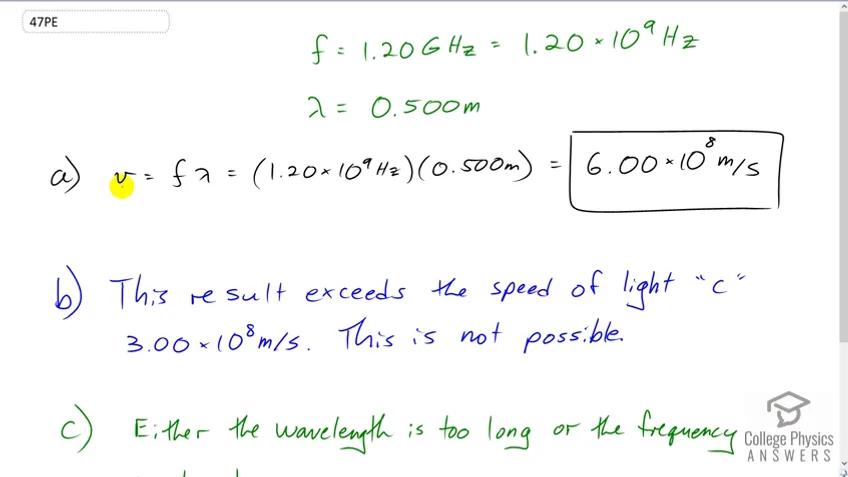
A researcher measures the wavelength of a 1.20-GHz electromagnetic wave to be 0.500 m. (a) Calculate the speed at which this wave propagates. (b) What is unreasonable about this result? (c) Which assumptions are unreasonable or inconsistent?
Final Answer
- This result exceeds the speed of light "c", . This is not possible.
- Either the wavelength is too long or the frequency is too large.
Solution video

This is a 15-second preview. Get access to the full video by starting your free 7-day trial.
This is a 15-second preview. Get access to the full video by starting your free 7-day trial.
Calculator Screenshots
Video Transcript
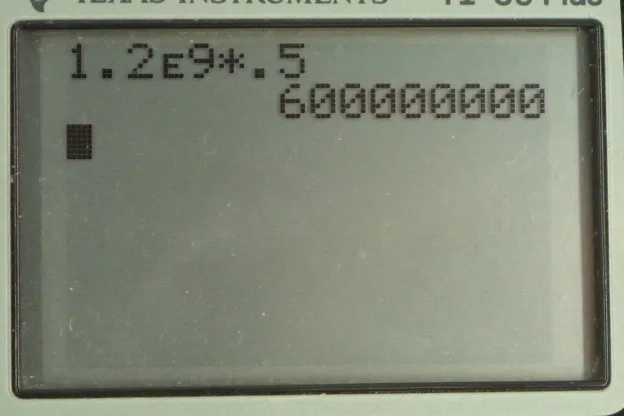
This is College Physics Answers with Shaun Dychko. An electromagnetic wave of frequency 1.2 gigahertz allegedly has a wavelength of 0.5 meters. This would give it a speed of frequency times Lambda because that's the wave equation of 1.2 times ten to the nine Hertz times 0.5 meters, which is six times ten to the eight meters per second. However, that number exceeds the speed of light which is three times ten to the eight meters per second. This calculated speed is two times the speed of light and is not possible to go faster than the speed of light. No exceptions have ever been found so far and so either the wavelength is too long or the frequency is too large.
Comments
No comments yet.